


- Retrait en 2 heures
- Assortiment impressionnant
- Paiement sécurisé
- Toujours un magasin près de chez vous
- Retrait en 2 heures
- Assortiment impressionnant
- Paiement sécurisé
- Toujours un magasin près de chez vous



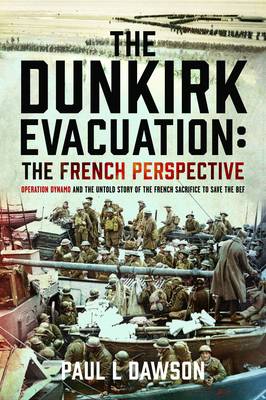
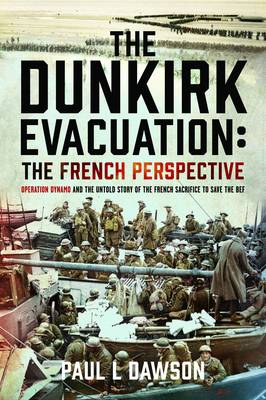
The Dunkirk Evacuation: The French Perspective
Operation Dynamo and the Untold Story of the French Sacrifice to Save the Bef
Paul L Dawson
Livre relié | Anglais
34,95 €
+ 69 points
Description
Hitler unleashed his Blitzkrieg in the West on 10 May 1940. As German troops advanced, the British Expeditionary Force, the French First Army and the Belgian Army found themselves squeezed into a narrow corridor between Lille and Dunkirk. By 24 May, there were 400,000 soldiers trapped there, with only one chance of survival - to be evacuated.
Somehow, the beleaguered Allied troops had to hold off the might of the German forces long enough for the bulk of the British, French and Belgian soldiers to be saved. Day after day the Germans attacked the defensive perimeter, but the defenders hung on. 'Even in defeat', wrote a German commander on 29 May, 'the French fight like lions ... the BEF is in complete disintegration. It has simply deserted all its vehicles and equipment and is fleeing to the sea.'
As the troops were lifted from the beaches and Dunkirk harbour, fewer and fewer men were left to defend the thinning and shrinking perimeter, one whole sector of which was manned by French troops. Finally, as the last ship departed from Dunkirk on 4 June, around 40,000 French troops were all that remained holding the line.
Finally, at 08.00 hours on 4 June, German troops reached the French naval headquarters in Dunkirk. It was there that General Barthélemy formally surrendered. 'No episode in the epic of Dunkirk, ' wrote the French historian of the battle, 'caused more heartbreak', as the brave defenders of Dunkirk marched into captivity. Their sacrifice was noted by Churchill, who recognised that, 'These troops thus made a splendid contribution to the safety of their more favoured comrades and the British Expeditionary Force.'
Using archival sources in France and Belgium, much of which has not been previously published in English, Paul Dawson throws fresh light on a little-known aspect of one of the most famous episodes of the Second World War. Had it not been for the sacrifices of the French troops, Britain's situation in the summer of 1940, as Hitler's forces bore down on the Channel coast, might have been far more precarious.
Somehow, the beleaguered Allied troops had to hold off the might of the German forces long enough for the bulk of the British, French and Belgian soldiers to be saved. Day after day the Germans attacked the defensive perimeter, but the defenders hung on. 'Even in defeat', wrote a German commander on 29 May, 'the French fight like lions ... the BEF is in complete disintegration. It has simply deserted all its vehicles and equipment and is fleeing to the sea.'
As the troops were lifted from the beaches and Dunkirk harbour, fewer and fewer men were left to defend the thinning and shrinking perimeter, one whole sector of which was manned by French troops. Finally, as the last ship departed from Dunkirk on 4 June, around 40,000 French troops were all that remained holding the line.
Finally, at 08.00 hours on 4 June, German troops reached the French naval headquarters in Dunkirk. It was there that General Barthélemy formally surrendered. 'No episode in the epic of Dunkirk, ' wrote the French historian of the battle, 'caused more heartbreak', as the brave defenders of Dunkirk marched into captivity. Their sacrifice was noted by Churchill, who recognised that, 'These troops thus made a splendid contribution to the safety of their more favoured comrades and the British Expeditionary Force.'
Using archival sources in France and Belgium, much of which has not been previously published in English, Paul Dawson throws fresh light on a little-known aspect of one of the most famous episodes of the Second World War. Had it not been for the sacrifices of the French troops, Britain's situation in the summer of 1940, as Hitler's forces bore down on the Channel coast, might have been far more precarious.
Spécifications
Parties prenantes
- Auteur(s) :
- Editeur:
Contenu
- Nombre de pages :
- 272
- Langue:
- Anglais
Caractéristiques
- EAN:
- 9781036133801
- Date de parution :
- 30-10-26
- Format:
- Livre relié
- Format numérique:
- Genaaid
- Dimensions :
- 159 mm x 235 mm


Seulement chez Librairie Club
+ 69 points sur votre carte client de Librairie Club
Cadeau


Les avis
Nous publions uniquement les avis qui respectent les conditions requises. Consultez nos conditions pour les avis.