


- Retrait en 2 heures
- Assortiment impressionnant
- Paiement sécurisé
- Toujours un magasin près de chez vous
- Retrait en 2 heures
- Assortiment impressionnant
- Paiement sécurisé
- Toujours un magasin près de chez vous



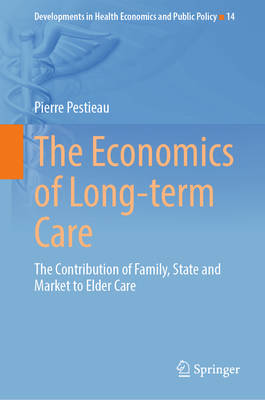
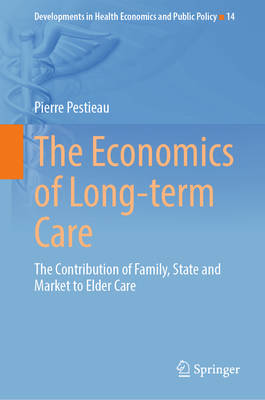
The Economics of Long-Term Care
The Contribution of Family, State and Market to Elder Care
Pierre Pestieau
64,95 €
+ 129 points
Description
As the need for long-term care expands, evaluating the roles of its primary providers-the state, the market, and the family-becomes increasingly essential. This book first examines recent research on the contributions of families and the marketplace to long-term care. Noting the decreasing involvement of families and the limitations of market-based solutions, it then shifts focus to studies that explore public policy development aimed at supporting elderly individuals without family assistance or adequate resources. These policies aim to create a comprehensive support system by utilizing both market mechanisms and family resources to meet the needs of the dependent elderly.
The book also provides a comparative analysis of how various countries, especially in Europe and North America, address disability and dependence in their long-term care systems, offering insights into diverse strategies and solutions. This cross-country perspective identifies effective practices and highlights areas requiring further development in social insurance and support frameworks. Through this exploration, the book seeks to deepen understanding of the influence of social norms and family solidarity on long-term care provision, emphasizing how these elements can be integrated into more resilient public policy structures.
Spécifications
Parties prenantes
- Auteur(s) :
- Editeur:
Contenu
- Nombre de pages :
- 103
- Langue:
- Anglais
- Collection :
- Tome:
- n° 14
Caractéristiques
- EAN:
- 9783032182364
- Date de parution :
- 22-05-26
- Format:
- Livre relié
- Format numérique:
- Genaaid
- Dimensions :
- 155 mm x 235 mm


Seulement chez Librairie Club
+ 129 points sur votre carte client de Librairie Club
Cadeau


Les avis
Nous publions uniquement les avis qui respectent les conditions requises. Consultez nos conditions pour les avis.