


- Retrait en 2 heures
- Assortiment impressionnant
- Paiement sécurisé
- Toujours un magasin près de chez vous
- Retrait en 2 heures
- Assortiment impressionnant
- Paiement sécurisé
- Toujours un magasin près de chez vous



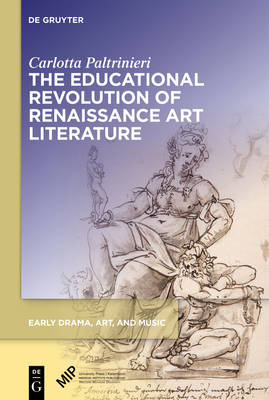
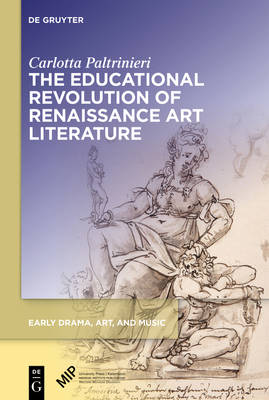
The Educational Revolution of Renaissance Art Literature
Carlotta Paltrinieri
177,45 €
+ 354 points
Description
This book builds on the foundational studies of Schlosser, Panofsky, Garin, Baxandall, and Blunt who traced the intellectual emancipation of the visual arts in Renaissance Italy, while responding to more recent scholarship on rhetoric, pedagogy, and art theory (Van Eck, Dressen, Ames-Lewis).
Unlike earlier treatments that isolate individual authors or emphasise social history, this study reframes Renaissance art treatises - by Cennini, Alberti, Leonardo, Varchi, and Vasari - as a coherent sub-genre of humanistic educational literature. By highlighting their pedagogical, rhetorical, and Aristotelian foundations, it uncovers the ways these texts forged a new ontological system that integrated the visual arts into the liberal arts.
The book's contribution lies in bridging art history, intellectual history, and literary studies, demonstrating how artistic literature both drew from and reshaped humanist discourse. In doing so, it addresses disciplinary fragmentation and repositions Renaissance art theory within the broader genealogy of the Humanities.
Spécifications
Parties prenantes
- Auteur(s) :
- Editeur:
Contenu
- Nombre de pages :
- 260
- Langue:
- Anglais
- Collection :
Caractéristiques
- EAN:
- 9781501524974
- Date de parution :
- 14-12-26
- Format:
- Livre relié
- Format numérique:
- Genaaid
- Dimensions :
- 160 mm x 240 mm


Seulement chez Librairie Club
+ 354 points sur votre carte client de Librairie Club
Cadeau


Les avis
Nous publions uniquement les avis qui respectent les conditions requises. Consultez nos conditions pour les avis.