


- Retrait en 2 heures
- Assortiment impressionnant
- Paiement sécurisé
- Toujours un magasin près de chez vous
- Retrait en 2 heures
- Assortiment impressionnant
- Paiement sécurisé
- Toujours un magasin près de chez vous



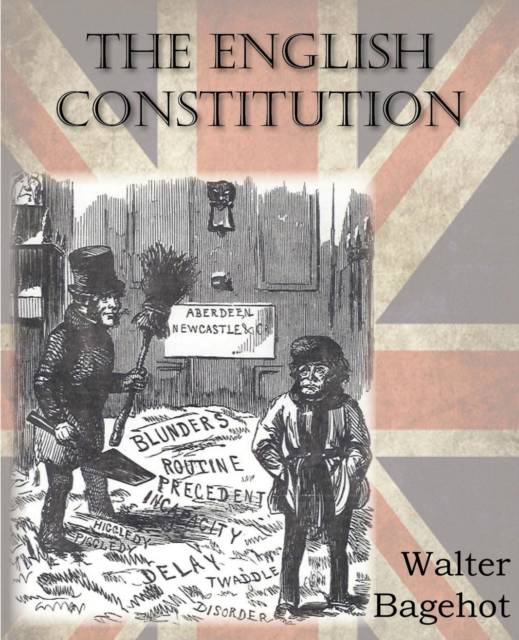
Description
"There is a great difficulty in the way of a writer who attempts to sketch a living Constitution-a Constitution that is in actual work and power. The difficulty is that the object is in constant change. An historical writer does not feel this difficulty: he deals only with the past; he can say definitely, the Constitution worked in such and such a manner in the year at which he begins, and in a manner in such and such respects different in the year at which he ends; he begins with a definite point of time and ends with one also. But a contemporary writer who tries to paint what is before him is puzzled and a perplexed: what he sees is changing daily. He must paint it as it stood at someone time, or else he will be putting side by side in his representations things which never were contemporaneous in reality. The difficulty is the greater because a writer who deals with a living Government naturally compares it with the most important other living Governments, and these are changing too; what he illustrates are altered in one way, and his sources of illustration are altered probably in a different way. This difficulty has been constantly in my way in preparing a second edition of this book. It describes the English Constitution as it stood in the years 1865 and 1866. Roughly speaking, it describes its working as it was in the time of Lord Palmerston; and since that time there have been many changes, some of spirit and some of detail. In so short a period there have rarely been more changes. If I had given a sketch of the Palmerston time as a sketch of the present time, it would have been in many points untrue; and if I had tried to change the sketch of seven years since into a sketch of the present time, I should probably have blurred the picture and have given something equally unlike both." Walter Bagehot was an English businessman, essayist, and journalist who wrote extensively about literature, government, and economic affairs.
Spécifications
Parties prenantes
- Auteur(s) :
- Editeur:
Contenu
- Nombre de pages :
- 140
- Langue:
- Anglais
Caractéristiques
- EAN:
- 9781612034638
- Date de parution :
- 01-03-2012
- Format:
- Livre broché
- Format numérique:
- Trade paperback (VS)
- Dimensions :
- 190 mm x 235 mm
- Poids :
- 254 g


Seulement chez Librairie Club
+ 48 points sur votre carte client de Librairie Club
Cadeau


Les avis
Nous publions uniquement les avis qui respectent les conditions requises. Consultez nos conditions pour les avis.