


- Retrait en 2 heures
- Assortiment impressionnant
- Paiement sécurisé
- Toujours un magasin près de chez vous
- Retrait gratuit dans votre magasin Club
- 7.000.0000 titres dans notre catalogue
- Payer en toute sécurité
- Toujours un magasin près de chez vous



151,95 €
+ 303 points
Description
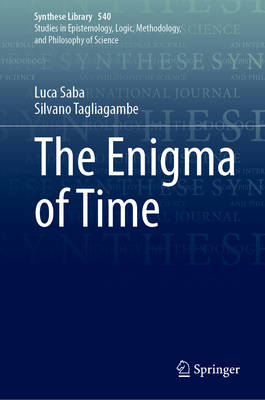
This book considers the concept of time after the shift from genetics to phylogenetics. It uses an interdisciplinary analysis based on the latest findings from neuroscience, physics, philosophy of medicine, epistemology, logic and artificial intelligence to delve into various aspects of the enigmatic character of time. The book shows how what we call 'experience' is structured by virtue of the availability of 'innate guides to learning' dating back to a deep memory, which has the long timescale of natural history and not the short timescale of individual development. Meanwhile, the idea of the 'future' is understood not as a calculated probability via statistics and artificial intelligence, but as an uncertain or open temporal dimension and an ethics of possibility. This book is of interest to scholars and specialists involved in this research, and to the general reader interested in the current cultural debate about evolution, memory, and time.
Spécifications
Parties prenantes
- Auteur(s) :
- Editeur:
Contenu
- Nombre de pages :
- 197
- Langue:
- Anglais
- Collection :
- Tome:
- n° 540
Caractéristiques
- EAN:
- 9783032260888
- Date de parution :
- 12-06-26
- Format:
- Livre relié
- Format numérique:
- Genaaid
- Dimensions :
- 155 mm x 235 mm


Seulement chez Librairie Club
+ 303 points sur votre carte client de Librairie Club
Cadeau

Cadeau


Les avis
Nous publions uniquement les avis qui respectent les conditions requises. Consultez nos conditions pour les avis.