


En raison d'une grève chez bpost, des retards de livraison peuvent survenir. Besoin de quelque chose en urgence ? Optez pour un retrait en magasin ou rendez-vous dans une Librairie Club à proximité.
- Retrait en 2 heures
- Assortiment impressionnant
- Paiement sécurisé
- Toujours un magasin près de chez vous
En raison d'une grève chez bpost, des retards de livraison peuvent survenir. Besoin de quelque chose en urgence ? Optez pour un retrait en magasin ou rendez-vous dans une Librairie Club à proximité.
- Retrait en 2 heures
- Assortiment impressionnant
- Paiement sécurisé
- Toujours un magasin près de chez vous



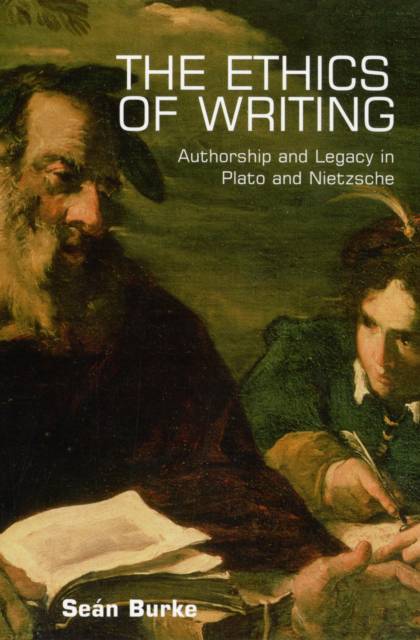
The Ethics of Writing
Authorship and Legacy in Plato and Nietzsche
Seán Burke
Livre broché | Anglais
67,95 €
+ 135 points
Description
Beginning amidst the tombs of the 'dead' God, and the crematoria at Auschwitz, this book, newly available in paperback, confronts the Nietzschean legacy through a Platonic focus. Plato argues in the Phaedrus that writing is dangerous because it can neither select its audience nor call upon its author to the rescue. Yet, he transgresses this ethical imperative in the Republic which has proved defenceless against use and abuse in the ideological foundation of totalitarian regimes. Burke goes on to analyse the dangerous games which Plato and Nietzsche played with posterity. At issue is how authors may protect against 'deviant readings' and assess 'the risk of writing'. Burke recommends an ethic of 'discursive containment'.The ethical question is the question of our times. Within critical theory, it has focused on the act of reading. This study reverses the terms of inquiry to analyse the ethical composition of the act of writing. What responsibility does an author bear for his legacy? Do 'catastrophic' misreadings of authors (e.g. Plato, Nietzsche) testify to authorial recklessness? These and other questions are the starting-point for a theory of authorial ethics which will be further developed in a forthcoming book on the interanimating thought of Emmanuel Levinas and Jacques Derrida.Continuing the mission of the 'returned author' begun in his pioneering book The Death and Return of the Author, Burke recommends the 'law of genre' as a contract drawn up between author and reader to establish ethical responsibility. Criticism, under this contract, becomes an ethical realm and realm of the ethical.Key Features*An original, provocative and arresting construction of a new debate: the responsibility of authors for the effects of their works*Courageous discussion of catastrophic readings which played a part in the establishment of totalitarian regimes such as Nazism, Fascism, and Communism *An extension of the author's pioneering work on authorship into its ethic
Spécifications
Parties prenantes
- Auteur(s) :
- Editeur:
Contenu
- Nombre de pages :
- 256
- Langue:
- Anglais
Caractéristiques
- EAN:
- 9780748641796
- Date de parution :
- 15-09-10
- Format:
- Livre broché
- Format numérique:
- Trade paperback (VS)
- Dimensions :
- 155 mm x 231 mm
- Poids :
- 399 g


Seulement chez Librairie Club
+ 135 points sur votre carte client de Librairie Club
Cadeau


Les avis
Nous publions uniquement les avis qui respectent les conditions requises. Consultez nos conditions pour les avis.