


- Retrait en 2 heures
- Assortiment impressionnant
- Paiement sécurisé
- Toujours un magasin près de chez vous
- Retrait en 2 heures
- Assortiment impressionnant
- Paiement sécurisé
- Toujours un magasin près de chez vous



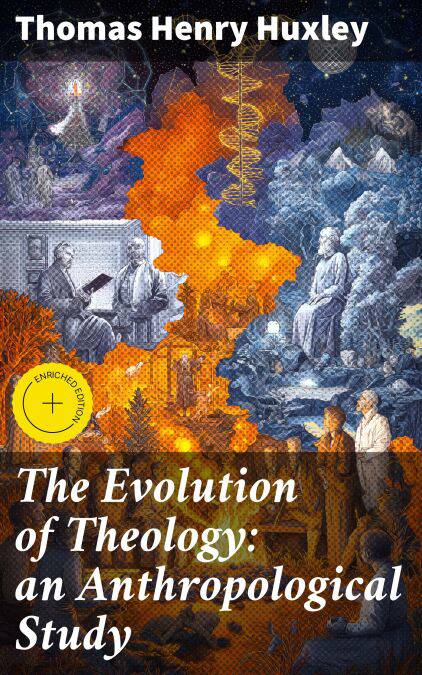
The Evolution of Theology: an Anthropological Study EBOOK
Enriched edition. Essay #8 from "Science and Hebrew Tradition"
Thomas Henry Huxley
Ebook | Anglais
0,49 €
Description
In "The Evolution of Theology: an Anthropological Study," Thomas Henry Huxley meticulously examines the evolving interplay between theology and human development through an anthropological lens. The work is characterized by Huxley's rigorous scientific approach, blending empirical observation with philosophical inquiry. He assesses religious belief as a product of evolutionary forces, arguing that theology has its origins in primitive human psychology and social structures. This paradigm shift reflects the broader Victorian context in which science began to challenge established religious norms, inviting readers to reconsider the foundations of belief in light of evolutionary theory. Huxley, often hailed as "Darwin's Bulldog" for his staunch defense of natural selection, draws upon his extensive background in biology and anthropology to inform this exploration. His experiences in the scientific community and his staunch advocacy for rational thought amid the tumult of religious dogma led him to confront the implications of evolution on theology. Huxley's intellectual journey reveals much about the tension between faith and science during the 19th century, making his insights profoundly relevant. This book is highly recommended for readers interested in the intersection of science and religion, as well as those exploring the anthropological underpinnings of belief systems. Huxley's compelling argumentation encourages reflection on how our understanding of the divine has evolved, fostering a deeper appreciation for the complexities of human thought.
In this enriched edition, we have carefully created added value for your reading experience:
- A succinct Introduction situates the work's timeless appeal and themes.
- The Synopsis outlines the central plot, highlighting key developments without spoiling critical twists.
- A detailed Historical Context immerses you in the era's events and influences that shaped the writing.
- A thorough Analysis dissects symbols, motifs, and character arcs to unearth underlying meanings.
- Reflection questions prompt you to engage personally with the work's messages, connecting them to modern life.
- Hand‐picked Memorable Quotes shine a spotlight on moments of literary brilliance.
- Interactive footnotes clarify unusual references, historical allusions, and archaic phrases for an effortless, more informed read.
In this enriched edition, we have carefully created added value for your reading experience:
- A succinct Introduction situates the work's timeless appeal and themes.
- The Synopsis outlines the central plot, highlighting key developments without spoiling critical twists.
- A detailed Historical Context immerses you in the era's events and influences that shaped the writing.
- A thorough Analysis dissects symbols, motifs, and character arcs to unearth underlying meanings.
- Reflection questions prompt you to engage personally with the work's messages, connecting them to modern life.
- Hand‐picked Memorable Quotes shine a spotlight on moments of literary brilliance.
- Interactive footnotes clarify unusual references, historical allusions, and archaic phrases for an effortless, more informed read.
Spécifications
Parties prenantes
- Auteur(s) :
- Editeur:
Contenu
- Nombre de pages :
- 146
- Langue:
- Anglais
Caractéristiques
- EAN:
- 4064066104160
- Date de parution :
- 15-03-20
- Format:
- Ebook
- Protection digitale:
- Digital watermarking
- Format numérique:
- ePub



Seulement chez Librairie Club
Cadeau


Les avis
Nous publions uniquement les avis qui respectent les conditions requises. Consultez nos conditions pour les avis.