


- Retrait en 2 heures
- Assortiment impressionnant
- Paiement sécurisé
- Toujours un magasin près de chez vous
- Retrait en 2 heures
- Assortiment impressionnant
- Paiement sécurisé
- Toujours un magasin près de chez vous



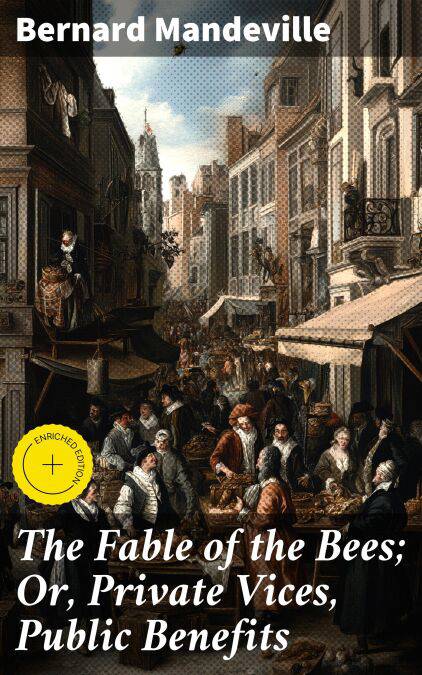
The Fable of the Bees; Or, Private Vices, Public Benefits EBOOK
Enriched edition. Exploring Self-Interest and Societal Progress in the Enlightenment Era
Bernard Mandeville
Ebook | Anglais
0,99 €
Format
Description
In 'The Fable of the Bees; Or, Private Vices, Public Benefits,' Bernard Mandeville intertwines a satirical narrative with philosophical discourse, examining the paradox between individual self-interest and societal welfare. Set in the early 18th century, this provocative work employs a fable-like allegory to critique contemporary moral values, challenging the idealism that equates virtue with public good. Mandeville's audacious thesis posits that private vices, such as greed and vanity, can inadvertently contribute to communal prosperity, thus blurring the traditional boundaries between morality and economic reality. His witty style and incisive reasoning invite readers to grapple with the complexities of human behavior, making this text a cornerstone of early economic thought and moral philosophy. Bernard Mandeville, a physician and social theorist, was born in 1670 in the Dutch Republic. His background in medicine and philosophy allowed him to explore the intricate relationships between individual actions and societal systems. Drawing inspiration from the emerging ideas of Enlightenment thinkers, Mandeville's works reflect a radical departure from the prevailing moral absolutism of his time, positioning him as a precursor to later economic theorists like Adam Smith and the utilitarian philosophers. This book is essential for readers intrigued by the intersections of economics, ethics, and social philosophy. Mandeville's bold exploration of the human condition invites a re-examination of accepted moral paradigms, encouraging debates that remain relevant today. Those seeking to understand the foundations of capitalism and the complexities of self-interest will find 'The Fable of the Bees' to be a challenging yet rewarding read.
In this enriched edition, we have carefully created added value for your reading experience:
- A succinct Introduction situates the work's timeless appeal and themes.
- The Synopsis outlines the central plot, highlighting key developments without spoiling critical twists.
- A detailed Historical Context immerses you in the era's events and influences that shaped the writing.
- A thorough Analysis dissects symbols, motifs, and character arcs to unearth underlying meanings.
- Reflection questions prompt you to engage personally with the work's messages, connecting them to modern life.
- Hand‐picked Memorable Quotes shine a spotlight on moments of literary brilliance.
- Interactive footnotes clarify unusual references, historical allusions, and archaic phrases for an effortless, more informed read.
In this enriched edition, we have carefully created added value for your reading experience:
- A succinct Introduction situates the work's timeless appeal and themes.
- The Synopsis outlines the central plot, highlighting key developments without spoiling critical twists.
- A detailed Historical Context immerses you in the era's events and influences that shaped the writing.
- A thorough Analysis dissects symbols, motifs, and character arcs to unearth underlying meanings.
- Reflection questions prompt you to engage personally with the work's messages, connecting them to modern life.
- Hand‐picked Memorable Quotes shine a spotlight on moments of literary brilliance.
- Interactive footnotes clarify unusual references, historical allusions, and archaic phrases for an effortless, more informed read.
Spécifications
Parties prenantes
- Auteur(s) :
- Editeur:
Contenu
- Nombre de pages :
- 640
- Langue:
- Anglais
Caractéristiques
- EAN:
- 4057664648143
- Date de parution :
- 20-11-19
- Format:
- Ebook
- Protection digitale:
- Digital watermarking
- Format numérique:
- ePub



Seulement chez Librairie Club
Cadeau

Cadeau


Les avis
Nous publions uniquement les avis qui respectent les conditions requises. Consultez nos conditions pour les avis.