


- Retrait en 2 heures
- Assortiment impressionnant
- Paiement sécurisé
- Toujours un magasin près de chez vous
- Retrait en 2 heures
- Assortiment impressionnant
- Paiement sécurisé
- Toujours un magasin près de chez vous



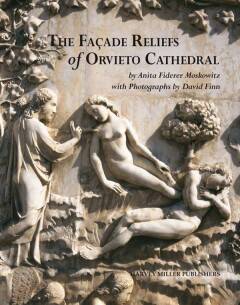
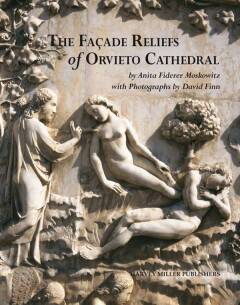
The Facade Reliefs of Orvieto Cathedral
Anita-F Moskowitz
95,40 €
+ 190 points
Description
This book presents in word and image the facade of Orvieto Cathedral, the reliefs of which are considered to be among the most beautiful andpowerful of the Trecento. The town of Orvieto, located half-way between Rome and Florence, played an important and strategic role in the political struggles in Italy during the latter part of the thirteenth century. Frequently the place of residence for popes and their Angevins allies, it became the seat of the Curia under Pope Nicholas IV, which brought wealth and economic growth to the community. Moreover, it enabled earlier plans for a new cathedral, initiated around 1285, to be finally realised. It was Pope Nicholas himself who laid the foundation stone of the new Duomo in 1290, and although building activity continued until well into the seventeenth century, most of the main portion of the building was complete by 1308, creating a dazzling and unique Gothic structure. The facade of the Cathedral in particular, is a masterpiece of design and relief sculpture. Its rich decorative carving is of outstanding quality and the innovative, compelling iconographic programme spreads across all four piers of the lower facade. The corpus of photographs by David Finn, taken specially for this publication, shows the skill and narrative details of this vituoso display of relief carving, while the text by Anita Fiderer Moskowitz, Professor of Art History at the State University ofNew York, Stony Brook, explains the building in the context of related Italian Gothic architecture, and discusses the problems and controversies regarding the designand ornamentation of the facade as well as the puzzling questionas to its artistic attribution. The author also interprets the basic iconography of the sculptures andprovides full descriptions for the detail images. 200 pages, 180 illustrations, Bibliography
Spécifications
Parties prenantes
- Auteur(s) :
- Editeur:
Contenu
- Nombre de pages :
- 245
- Langue:
- Anglais
- Collection :
- Tome:
- n° 57
Caractéristiques
- EAN:
- 9781905375271
- Date de parution :
- 24-03-10
- Format:
- Livre relié
- Format numérique:
- Genaaid
- Dimensions :
- 226 mm x 284 mm
- Poids :
- 1496 g


Seulement chez Librairie Club
+ 190 points sur votre carte client de Librairie Club
Cadeau


Les avis
Nous publions uniquement les avis qui respectent les conditions requises. Consultez nos conditions pour les avis.