


- Retrait en 2 heures
- Assortiment impressionnant
- Paiement sécurisé
- Toujours un magasin près de chez vous
- Retrait en 2 heures
- Assortiment impressionnant
- Paiement sécurisé
- Toujours un magasin près de chez vous



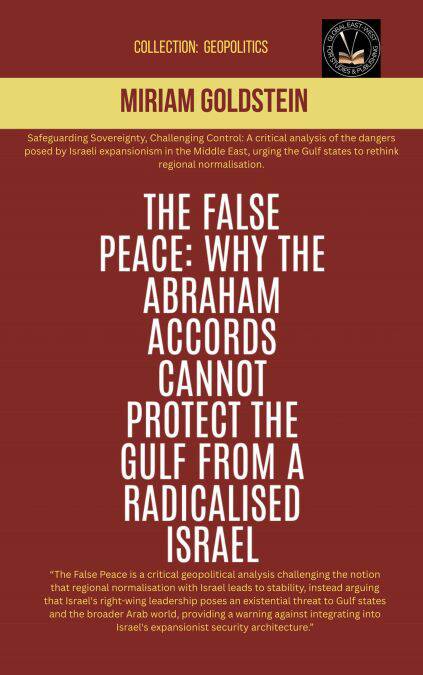
The False Peace: Why The Abraham Accords Cannot Protect The Gulf From A radicalised Israel EBOOK
Geopolitics
Miriam Goldstein
23,49 €
+ 23 points
Description
Miriam Goldstein's book, "The False Peace: Why the Abrahamic Accords Cannot Protect the Gulf from a Radicalised Israel," unpacks this dynamic patchwork of relationships, where disputes continue to simmer underneath while regional actors clash over differing visions of their neighbours and the world.
While the accords are seen as normative milestones, they will also subject the Gulf States to Israel's ideological ups and downs, creating a complex realm in which multiple narratives and legitimacy struggles seek to subvert each other.
In her discussion of the politics of negotiation, Goldstein stresses that listening with empathy and communicating productively are often found when public idealism meets private realpolitik. Backchannel conversations, indispensable for reconciliation between enemies, are delicate in the high-stakes climate and prone to misunderstanding, as past stalemates (which were followed by a series of proxy wars) indicate. Such division is only exacerbated by the media's role in determining narratives—through biased reporting that warps public perception and erodes trust—emphasising just how much of a key diplomatic tool media literacy can be.
Economic inducements between aid and investment lead the latter to offer cooperation but may set prevalent negative power arrangements, which turn wealth into a geopolitical tool. Goldstein analyses the parties' successes and failures in implementing the accords, showing how long-standing grievances and unequal power distribution make even a government's grey-zone agreements inherently unstable. Regional voices vary, and only time will reveal whether future alliances will be beneficial or detrimental, as well as the role of technology diplomacy in an increasingly interdependent global economy.
Weaving in both historical perspective and the human dimension of statecraft, Goldstein issues a blistering indictment of what the accords do not deliver: security. Advocating stable overtures that aim to balance the autonomy of Gulf states while slowly weaning them off from Israel's orbit, her book affords readers a more complex understanding of influence and the need for genuine peace.
Spécifications
Parties prenantes
- Auteur(s) :
- Editeur:
Contenu
- Langue:
- Anglais
- Collection :
Caractéristiques
- EAN:
- 9798232287092
- Date de parution :
- 04-12-25
- Format:
- Ebook
- Protection digitale:
- Adobe DRM
- Format numérique:
- ePub


Seulement chez Librairie Club
+ 23 points sur votre carte client de Librairie Club
Cadeau


Les avis
Nous publions uniquement les avis qui respectent les conditions requises. Consultez nos conditions pour les avis.