


En raison d'une grève chez bpost, des retards de livraison peuvent survenir. Besoin de quelque chose en urgence ? Optez pour un retrait en magasin ou rendez-vous dans une Librairie Club à proximité.
- Retrait en 2 heures
- Assortiment impressionnant
- Paiement sécurisé
- Toujours un magasin près de chez vous
En raison d'une grève chez bpost, des retards de livraison peuvent survenir. Besoin de quelque chose en urgence ? Optez pour un retrait en magasin ou rendez-vous dans une Librairie Club à proximité.
- Retrait en 2 heures
- Assortiment impressionnant
- Paiement sécurisé
- Toujours un magasin près de chez vous



Description
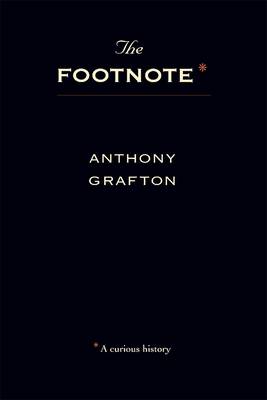
The weapon of pedants, the scourge of undergraduates, the bête noire of the "new" liberated scholar: the lowly footnote, long the refuge of the minor and the marginal, emerges in this book as a singular resource, with a surprising history that says volumes about the evolution of modern scholarship. In Anthony Grafton's engrossing account, footnotes to history give way to footnotes as history, recounting in their subtle way the curious story of the progress of knowledge in written form. Grafton treats the development of the footnote--the one form of proof normally supplied by historians in support of their assertions--as writers on science have long treated the development of laboratory equipment, statistical arguments, and reports on experiments: as a complex story, rich in human interest, that sheds light on the status of history as art, as science, and as an institution. The book starts in the Berlin of the brilliant nineteenth-century historian Leopold von Ranke, who is often credited with inventing documented history in its modern form. Casting back to antiquity and forward to the twentieth century, Grafton's investigation exposes Ranke's position as a far more ambiguous one and offers us a rich vision of the true origins and gradual triumph of the footnote. Among the protagonists of this story are Athanasius Kircher, who built numerous documents into his spectacularly speculative treatises on ancient Egypt and China; Pierre Bayle, who made the footnote a powerful tool in philosophical and historical polemics; and Edward Gibbon, who transformed it into a high form of literary artistry. Proceeding with the spirit of an intellectual mystery and peppered with intriguing and revealing remarks by those who "made" this history, The Footnote brings what is so often relegated to afterthought and marginalia to its rightful place in the center of the literary life of the mind.
Spécifications
Parties prenantes
- Auteur(s) :
- Editeur:
Contenu
- Nombre de pages :
- 256
- Langue:
- Anglais
Caractéristiques
- EAN:
- 9780674307605
- Date de parution :
- 01-04-99
- Format:
- Livre broché
- Format numérique:
- Trade paperback (VS)
- Dimensions :
- 132 mm x 204 mm
- Poids :
- 281 g


Seulement chez Librairie Club
+ 44 points sur votre carte client de Librairie Club
Cadeau


Les avis
Nous publions uniquement les avis qui respectent les conditions requises. Consultez nos conditions pour les avis.