


- Retrait en 2 heures
- Assortiment impressionnant
- Paiement sécurisé
- Toujours un magasin près de chez vous
- Retrait en 2 heures
- Assortiment impressionnant
- Paiement sécurisé
- Toujours un magasin près de chez vous



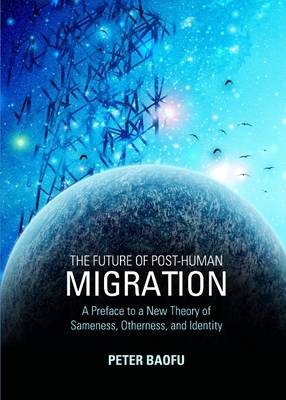
The Future of Post-Human Migration
A Preface to a New Theory of Sameness, Otherness, and Identity
Peter Baofu
Livre relié | Anglais
186,45 €
+ 372 points
Description
Is migration really so constructive that, as Ralph Emerson (1909) once wrote, in the context of the New World, asylum of all nations . . . will construct a new race, a new religion, a new state, a new . . . smelting-pot? (WK 2012) This noble lie-the melting pot in the 20th century-can be contrasted with an opposing noble lie of the salad bowl in the 21st century, when those in multiculturalism like Tariq Modood (2007) argue nowadays that multiculturalism is most timely and necessary, and . . . we need more not less. (WK 2012a) Contrary to these opposing noble lies (and other views as will be discussed in the book), migration, in relation to both the Same and the Others, is neither possible or impossible, nor desirable or undesirable, to the extent that the respective ideologues on different sides would like us to believe. Surely, this exposure of the opposing noble lies about migration does not mean that the specific field of study on migration is a waste of time, or that those interdisciplinary fields (related to the study of migration) like animal migration, gene migration, diaspora politics, culural assimlation, human trafficking, urbanization, brain drain, tourism, ethnic cleansing, environmental migration, globalization, religious persecution, national identity, gentrification, fifth column, migration art, xenophobia, space colonization, multiculturalism, and so on are worthless. Needless to say, neither of these extreme views is reasonable. Instead, this book offers an alternative, better way to understand the future of migration, especially in the dialectic context of the Same and the Others-while learning from different approaches in the literature but without favoring any one of them or integrating them, since they are not necessarily compatible with each other. More specifically, this book offers a new theory (that is, the theory of the cyclical progression of migration) to go beyond the existing approaches in a novel way. If successful, this seminal project is to fundamentally change the way that we think about migration in relation to Sameness, Otherness, and identity, from the combined perspectives of the mind, nature, society, and culture, with enormous implications for the human future and what the author originally called its post-human fate.
Spécifications
Parties prenantes
- Auteur(s) :
- Editeur:
Contenu
- Nombre de pages :
- 630
- Langue:
- Anglais
Caractéristiques
- EAN:
- 9781443839846
- Date de parution :
- 28-05-2012
- Format:
- Livre relié
- Format numérique:
- Genaaid
- Dimensions :
- 152 mm x 208 mm
- Poids :
- 952 g


Seulement chez Librairie Club
+ 372 points sur votre carte client de Librairie Club
Cadeau


Les avis
Nous publions uniquement les avis qui respectent les conditions requises. Consultez nos conditions pour les avis.