


- Retrait en 2 heures
- Assortiment impressionnant
- Paiement sécurisé
- Toujours un magasin près de chez vous
- Retrait en 2 heures
- Assortiment impressionnant
- Paiement sécurisé
- Toujours un magasin près de chez vous



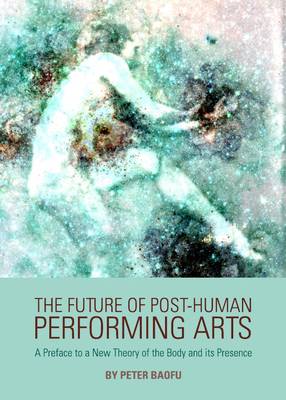
The Future of Post-Human Performing Arts
A Preface to a New Theory of the Body and Its Presence
Peter Baofu
Livre relié | Anglais
157,95 €
+ 315 points
Description
Are the performing arts really supposed to be so radical that, as John Cage once said in the context of music, there is no noise, only sound, since he argued that any sounds we can hear can be music? (WK 2007a; D. Harwood 1976) This radical tradition in performing arts, with music as an example here, can be contrasted with an opposing view in the older days, when Greek philosophers and medieval theorists in music defined music as tones ordered horizontally as melodies, and vertically as harmonies. Music theory, within this realm, is studied with the presupposition that music is orderly and often pleasant to hear. (WK 2007a) Contrary to these opposing traditions (and other views as will be discussed in the book), performing arts, in relation to both the body and its presence, is neither possible nor desirable to the extent that the respective ideologues on different sides would like us to believe. Needless to say, the challenge to these opposing traditions in performing arts does not imply that performing arts are worthless human endeavors, or that those fields of study related to performing arts like aesthetics, acoustics, communication studies, psychology, culture studies, sociology, religion, morality, and so on should be rejected too. Of course, neither of these extreme views is reasonable. Instead, this book provides an alternative, better way of understanding the future of performing arts, especially in the dialectic context of the body and its presence-while learning from different approaches in the literature but without favoring any one of them or integrating them, since they are not necessarily compatible with each other. In other words, this book offers a new theory (that is, the transdisiciplinary theory of performing arts) to go beyond the existing approaches in a novel way. If successful, this seminal project will fundamentally change the way that we think about performing arts, from the combined perspectives of the mind, nature, society, and culture, with enormous implications for the human future and what the author originally called its post-human fate.
Spécifications
Parties prenantes
- Auteur(s) :
- Editeur:
Contenu
- Nombre de pages :
- 560
- Langue:
- Anglais
Caractéristiques
- EAN:
- 9781443835206
- Date de parution :
- 25-11-11
- Format:
- Livre relié
- Format numérique:
- Genaaid
- Dimensions :
- 152 mm x 203 mm
- Poids :
- 771 g


Seulement chez Librairie Club
+ 315 points sur votre carte client de Librairie Club
Cadeau


Les avis
Nous publions uniquement les avis qui respectent les conditions requises. Consultez nos conditions pour les avis.