


- Retrait en 2 heures
- Assortiment impressionnant
- Paiement sécurisé
- Toujours un magasin près de chez vous
- Retrait gratuit dans votre magasin Club
- 7.000.0000 titres dans notre catalogue
- Payer en toute sécurité
- Toujours un magasin près de chez vous


16,12 €
+ 16 points
Description
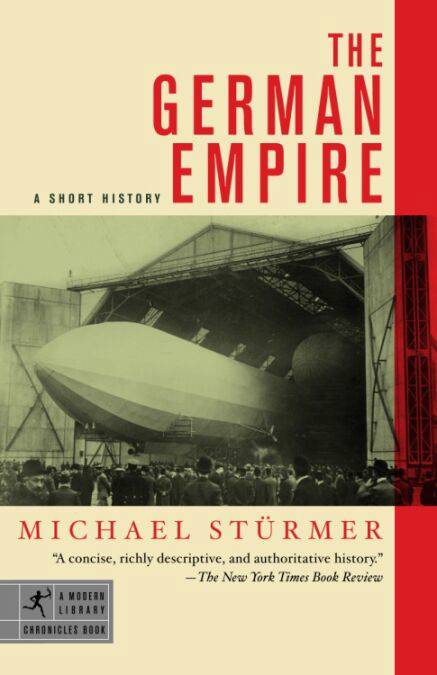
In The German Empire, one of Europe's great historians and men of letters chronicles one of history's most fateful transformations--Germany's rise from new nation to prime mover in the chain of events that sent it hurtling into two world wars.
In 1871, Otto von Bismarck fused with "blood and iron" a motley collection of principalities, Free Cities, and bishoprics into one Reich. In England, Benjamin Disraeli observed that the world was witnessing "a greater political event than the French revolution of last century. . . . [T]here is not a diplomatic tradition which has not been swept away. . . . The balance of power has been entirely destroyed." Disraeli's powers of prophecy, in this as in much else, were formidable.
The Age of Bismarck saw Germany become the dynamo of Europe--its preeminent economic and military power, its scientific and educational nerve center, and a place of tremendous artistic ferment. But there would be no simple spell to return to their bottles the genies unleashed by these vast forces, and Michael Stürmer traces the convergence of people and events that sent Europe's fragile balance of power over the brink and into conflict. No war was fought for less purpose or with greater slaughter than the First World War which, in Michael Stürmer's assured hands, arrives as the next-to-last act of an epic drama all the more tragic for the blazing brilliance of its opening scenes. Though the drama's final horrible act, the Second World War, takes place offstage from The German Empire, it is impossible to understand its origins without the history Michael Stürmer tells here with such elegance and insight.
In 1871, Otto von Bismarck fused with "blood and iron" a motley collection of principalities, Free Cities, and bishoprics into one Reich. In England, Benjamin Disraeli observed that the world was witnessing "a greater political event than the French revolution of last century. . . . [T]here is not a diplomatic tradition which has not been swept away. . . . The balance of power has been entirely destroyed." Disraeli's powers of prophecy, in this as in much else, were formidable.
The Age of Bismarck saw Germany become the dynamo of Europe--its preeminent economic and military power, its scientific and educational nerve center, and a place of tremendous artistic ferment. But there would be no simple spell to return to their bottles the genies unleashed by these vast forces, and Michael Stürmer traces the convergence of people and events that sent Europe's fragile balance of power over the brink and into conflict. No war was fought for less purpose or with greater slaughter than the First World War which, in Michael Stürmer's assured hands, arrives as the next-to-last act of an epic drama all the more tragic for the blazing brilliance of its opening scenes. Though the drama's final horrible act, the Second World War, takes place offstage from The German Empire, it is impossible to understand its origins without the history Michael Stürmer tells here with such elegance and insight.
Spécifications
Parties prenantes
- Auteur(s) :
- Editeur:
Contenu
- Nombre de pages :
- 192
- Langue:
- Anglais
- Collection :
Caractéristiques
- EAN:
- 9780307432254
- Date de parution :
- 17-12-07
- Format:
- Ebook
- Protection digitale:
- Adobe DRM
- Format numérique:
- ePub


Seulement chez Librairie Club
+ 16 points sur votre carte client de Librairie Club
Cadeau

Cadeau


Les avis
Nous publions uniquement les avis qui respectent les conditions requises. Consultez nos conditions pour les avis.