


- Retrait en 2 heures
- Assortiment impressionnant
- Paiement sécurisé
- Toujours un magasin près de chez vous
- Retrait en 2 heures
- Assortiment impressionnant
- Paiement sécurisé
- Toujours un magasin près de chez vous



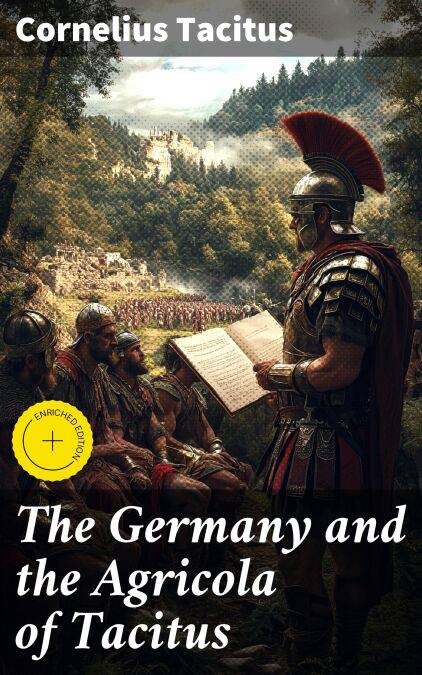
The Germany and the Agricola of Tacitus EBOOK
Enriched edition. Insightful Analysis of Roman Military Tactics and Cultural Exchange
Cornelius Tacitus
Ebook | Anglais
0,99 €
1,99 €
Description
In "The Germany and the Agricola," Cornelius Tacitus presents a profound analysis of the Germanic tribes and the life of his father-in-law, Gnaeus Julius Agricola, a Roman general and governor of Britain. Written around 98 AD, this work exemplifies Tacitus's distinctive literary style, characterized by its concise prose, masterful use of rhetoric, and sharp moral commentary. The text not only chronicles the customs and social structures of the Germanic peoples but also offers a critical reflection on Roman imperialism and the juxtaposition between civilization and barbarism. Tacitus employs vivid descriptions and powerful contrasts to evoke a sense of nostalgia for a lost simplicity and the moral decay of Rome, enhancing its historical significance in the context of Roman literature. Tacitus, an esteemed senator and historian of the Roman Empire, was deeply influenced by the political dynamics and cultural tensions of his time. His experiences in Rome, coupled with his family connections to influential military figures, particularly Agricola, motivated him to provide an account that intertwines personal narrative with broader historical themes. Through sharp observation and astute commentary, Tacitus critiques the corruption of Roman society while celebrating the virtues of the so-called 'barbaric' tribes in Germania. "The Germany and the Agricola" is essential reading for anyone interested in Roman history, cultural studies, or the intricacies of ancient civilizations. Tacitus's work not only sheds light on the early perceptions of the Germanic tribes but also lays the groundwork for understanding the complexities of cultural identity and imperial expansion. A testament to his literary prowess, this text is a compelling exploration of the human experience, making it a valuable addition to both scholarly collections and personal libraries.
In this enriched edition, we have carefully created added value for your reading experience:
- A comprehensive Introduction outlines these selected works' unifying features, themes, or stylistic evolutions.
- The Author Biography highlights personal milestones and literary influences that shape the entire body of writing.
- A Historical Context section situates the works in their broader era—social currents, cultural trends, and key events that underpin their creation.
- A concise Synopsis (Selection) offers an accessible overview of the included texts, helping readers navigate plotlines and main ideas without revealing critical twists.
- A unified Analysis examines recurring motifs and stylistic hallmarks across the collection, tying the stories together while spotlighting the different work's strengths.
- Reflection questions inspire deeper contemplation of the author's overarching message, inviting readers to draw connections among different texts and relate them to modern contexts.
- Lastly, our hand‐picked Memorable Quotes distill pivotal lines and turning points, serving as touchstones for the collection's central themes.
In this enriched edition, we have carefully created added value for your reading experience:
- A comprehensive Introduction outlines these selected works' unifying features, themes, or stylistic evolutions.
- The Author Biography highlights personal milestones and literary influences that shape the entire body of writing.
- A Historical Context section situates the works in their broader era—social currents, cultural trends, and key events that underpin their creation.
- A concise Synopsis (Selection) offers an accessible overview of the included texts, helping readers navigate plotlines and main ideas without revealing critical twists.
- A unified Analysis examines recurring motifs and stylistic hallmarks across the collection, tying the stories together while spotlighting the different work's strengths.
- Reflection questions inspire deeper contemplation of the author's overarching message, inviting readers to draw connections among different texts and relate them to modern contexts.
- Lastly, our hand‐picked Memorable Quotes distill pivotal lines and turning points, serving as touchstones for the collection's central themes.
Spécifications
Parties prenantes
- Auteur(s) :
- Editeur:
Contenu
- Nombre de pages :
- 215
- Langue:
- Anglais
Caractéristiques
- EAN:
- 4057664190918
- Date de parution :
- 19-11-19
- Format:
- Ebook
- Protection digitale:
- Digital watermarking
- Format numérique:
- ePub


Seulement chez Librairie Club
Cadeau


Les avis
Nous publions uniquement les avis qui respectent les conditions requises. Consultez nos conditions pour les avis.