


- Retrait en 2 heures
- Assortiment impressionnant
- Paiement sécurisé
- Toujours un magasin près de chez vous
- Retrait en 2 heures
- Assortiment impressionnant
- Paiement sécurisé
- Toujours un magasin près de chez vous



38,95 €
+ 77 points
Description
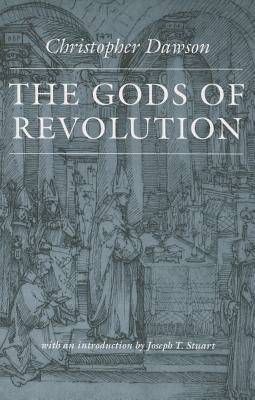
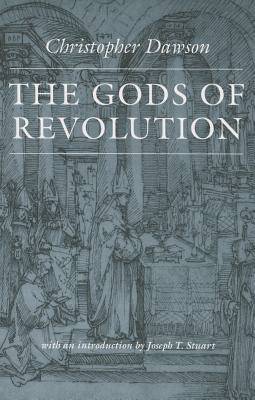
In The Gods of Revolution, Christopher Dawson brought to bear, as Glanmor Williams said, "his brilliantly perceptive powers of analysis on the French Revolution. . . . In so doing he reversed the trends of recent historiography which has concentrated primarily on examining the social and economic context of that great upheaval."
Dawson underlines the fact that the Revolution was not animated by democratic ideals but rather reflected an authoritarian liberalism often marked by a fundamental contempt for the populace, described by Voltaire as "the 'canaille' that is not worthy of enlightenment and which deserves its yoke." The old Christian order had stressed a common faith and common service shared by nobles and peasants alike but Rousseau "pleads the cause of the individual against society, the poor against the rich, and the people against the privileged classes." It is Rousseau whom Dawson describes as the spiritual father of the new age in disclosing a new spirit of revolutionary idealism expressed in liberalism, socialism and anarchism. But the old unity was not replaced by a new form. Dawson insists the whole period following the Revolution is "characterized by a continual struggle between conflicting ideologies," and the periods of relative stabilization such as the Napoleonic restoration, Victorian liberalism in England, and capitalist imperialism in the second German empire "have been compromises or temporary truces between two periods of conquest." This leads to his assertion that "the survival of western culture demands unity as well as freedom, and the great problem of our time is how these two essentials are to be reconciled."
This reconciliation will require more than technological efficiency for "a free society requires a higher degree of spiritual unity than a totalitarian one. Hence the spiritual integration of western culture is essential to its temporal survival." It is to Christianity alone that western culture "must look for leadership and help in restoring the moral and spiritual unity of our civilization," for it alone has the influence, "in ethics, in education, in literature, and in social action" sufficiently strong to achieve this end.
ABOUT THE AUTHOR
Christopher Dawson (1889-1970) is recognized as one of the most important Catholic historians of the twentieth century, authoring numerous books, articles, and scholarly monographs. Dawson was lecturer in the History of Culture, University College, Exeter; Gifford lecturer; and Charles Chauncey Stillman Chair of Roman Catholic Studies at Harvard University from 1958 to 1962.
Dawson underlines the fact that the Revolution was not animated by democratic ideals but rather reflected an authoritarian liberalism often marked by a fundamental contempt for the populace, described by Voltaire as "the 'canaille' that is not worthy of enlightenment and which deserves its yoke." The old Christian order had stressed a common faith and common service shared by nobles and peasants alike but Rousseau "pleads the cause of the individual against society, the poor against the rich, and the people against the privileged classes." It is Rousseau whom Dawson describes as the spiritual father of the new age in disclosing a new spirit of revolutionary idealism expressed in liberalism, socialism and anarchism. But the old unity was not replaced by a new form. Dawson insists the whole period following the Revolution is "characterized by a continual struggle between conflicting ideologies," and the periods of relative stabilization such as the Napoleonic restoration, Victorian liberalism in England, and capitalist imperialism in the second German empire "have been compromises or temporary truces between two periods of conquest." This leads to his assertion that "the survival of western culture demands unity as well as freedom, and the great problem of our time is how these two essentials are to be reconciled."
This reconciliation will require more than technological efficiency for "a free society requires a higher degree of spiritual unity than a totalitarian one. Hence the spiritual integration of western culture is essential to its temporal survival." It is to Christianity alone that western culture "must look for leadership and help in restoring the moral and spiritual unity of our civilization," for it alone has the influence, "in ethics, in education, in literature, and in social action" sufficiently strong to achieve this end.
ABOUT THE AUTHOR
Christopher Dawson (1889-1970) is recognized as one of the most important Catholic historians of the twentieth century, authoring numerous books, articles, and scholarly monographs. Dawson was lecturer in the History of Culture, University College, Exeter; Gifford lecturer; and Charles Chauncey Stillman Chair of Roman Catholic Studies at Harvard University from 1958 to 1962.
Spécifications
Parties prenantes
- Auteur(s) :
- Editeur:
Contenu
- Nombre de pages :
- 200
- Langue:
- Anglais
- Collection :
Caractéristiques
- EAN:
- 9780813227092
- Date de parution :
- 22-01-15
- Format:
- Livre broché
- Format numérique:
- Trade paperback (VS)
- Dimensions :
- 178 mm x 211 mm
- Poids :
- 285 g


Seulement chez Librairie Club
+ 77 points sur votre carte client de Librairie Club
Cadeau


Les avis
Nous publions uniquement les avis qui respectent les conditions requises. Consultez nos conditions pour les avis.