


- Retrait en 2 heures
- Assortiment impressionnant
- Paiement sécurisé
- Toujours un magasin près de chez vous
- Retrait en 2 heures
- Assortiment impressionnant
- Paiement sécurisé
- Toujours un magasin près de chez vous



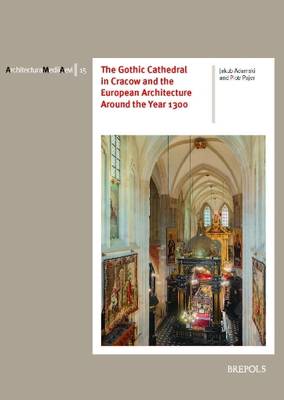
The Gothic Cathedral in Cracow and the European Architecture Around the Year 1300
Piotr Pajor, Jakub Adamski
137,80 €
+ 275 points
Description
The turn of the thirteenth century was a difficult period in the history of late medieval Europe, marked by political instability, endless wars, and all possible disasters. Yet it saw an extraordinarily abundant flowering of Gothic architecture, marked by constant stylistic transformations that gave rise to a new phenomenon in European architecture - the late Gothic. This book is devoted to an edifice that perfectly represents these complex transformations: the Gothic cathedral in Cracow (1320-1364). Although situated on the periphery of the Latin world of the era, it is one of the most stylistically advanced buildings that can be counted as examples of "architecture around 1300", displaying most of the artistic phenomena that distinguish this period in the history of medieval art. Moreover, this church served as the coronation site and necropolis of the kings of Poland, and the national shrine of the patron saint of the Kingdom, Saint Stanislaus, which situates it alongside such sacred places as those in Reims, Saint-Denis, Westminster, Aachen or Prague. This new study shows the Cracow cathedral in the broad context of the epoch-making stylistic transformations occurring in Gothic architecture around the years 1270-1350, and presents this interregional phenomenon in a completely new manner, taking into account many buildings in Poland and Central Europe, usually overlooked in such studies. In addition to the history of style, the book focuses on the interface of politics, functional and liturgical considerations, and requirements of ceremony and display as determinants of the form and function of a work of architecture.
Spécifications
Parties prenantes
- Auteur(s) :
- Editeur:
Contenu
- Nombre de pages :
- 430
- Langue:
- Anglais
- Collection :
- Tome:
- n° 15
Caractéristiques
- EAN:
- 9782503616582
- Date de parution :
- 12-01-2026
- Format:
- Livre broché
- Format numérique:
- Trade paperback (VS)
- Poids :
- 984 g


Seulement chez Librairie Club
+ 275 points sur votre carte client de Librairie Club
Cadeau


Les avis
Nous publions uniquement les avis qui respectent les conditions requises. Consultez nos conditions pour les avis.