


- Retrait en 2 heures
- Assortiment impressionnant
- Paiement sécurisé
- Toujours un magasin près de chez vous
- Retrait gratuit dans votre magasin Club
- 7.000.0000 titres dans notre catalogue
- Payer en toute sécurité
- Toujours un magasin près de chez vous



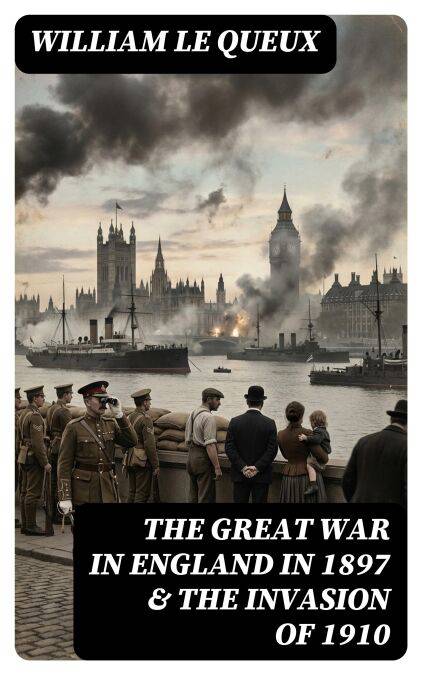
The Great War in England in 1897 & The Invasion of 1910 EBOOK
Enriched edition.
William Le Queux
Ebook | Anglais
1,99 €
+ 1 points
Description
William Le Queux's "The Great War in England in 1897 & The Invasion of 1910" is a prescient work that blends elements of science fiction and social commentary within the context of late-Victorian fears and anxieties. Set against a backdrop of impending conflict and espionage, the narrative explores a fictitious invasion of Britain by a coalition of foreign powers, deftly weaving geopolitical concerns with public sentiment. Le Queux employs vivid imagery and a fast-paced narrative style, echoing the era's burgeoning fascination with nationalism and militarism, while also serving as a cautionary tale about the fragility of peace in an increasingly interconnected world. His portrayal of a besieged England reflects the growing tensions of his time, offering a unique lens on the societal mindset leading up to the historical world wars. William Le Queux, a journalist and prolific writer, was an astute observer of the changing political landscape at the turn of the 20th century. His experiences and travels across Europe, coupled with his interest in military affairs, informed his writing, allowing him to craft narratives that resonated with contemporary readers' fears of invasion and decline. Le Queux was also known for his engaging storytelling and ability to intertwine fact with fiction, making him a notable figure in early speculative literature. This book is a compelling read for enthusiasts of historical fiction and those intrigued by the dynamics of war and society. Le Queux's foresight into the nature of conflict and its impact on national identity invites readers to reflect on the cyclical patterns of history. It serves as a stark reminder of the vulnerabilities that come with prosperity, making it a valuable addition to discussions on imperialism, national defense, and the human condition.
In this enriched edition, we have carefully created added value for your reading experience:
- A comprehensive Introduction outlines these selected works' unifying features, themes, or stylistic evolutions.
- A Historical Context section situates the works in their broader era—social currents, cultural trends, and key events that underpin their creation.
- A concise Synopsis (Selection) offers an accessible overview of the included texts, helping readers navigate plotlines and main ideas without revealing critical twists.
- A unified Analysis examines recurring motifs and stylistic hallmarks across the collection, tying the stories together while spotlighting the different work's strengths.
- Reflection questions inspire deeper contemplation of the author's overarching message, inviting readers to draw connections among different texts and relate them to modern contexts.
- Lastly, our hand‐picked Memorable Quotes distill pivotal lines and turning points, serving as touchstones for the collection's central themes.
In this enriched edition, we have carefully created added value for your reading experience:
- A comprehensive Introduction outlines these selected works' unifying features, themes, or stylistic evolutions.
- A Historical Context section situates the works in their broader era—social currents, cultural trends, and key events that underpin their creation.
- A concise Synopsis (Selection) offers an accessible overview of the included texts, helping readers navigate plotlines and main ideas without revealing critical twists.
- A unified Analysis examines recurring motifs and stylistic hallmarks across the collection, tying the stories together while spotlighting the different work's strengths.
- Reflection questions inspire deeper contemplation of the author's overarching message, inviting readers to draw connections among different texts and relate them to modern contexts.
- Lastly, our hand‐picked Memorable Quotes distill pivotal lines and turning points, serving as touchstones for the collection's central themes.
Spécifications
Parties prenantes
- Auteur(s) :
- Editeur:
Contenu
- Nombre de pages :
- 729
- Langue:
- Anglais
Caractéristiques
- EAN:
- 8596547009849
- Date de parution :
- 16-05-22
- Format:
- Ebook
- Protection digitale:
- Digital watermarking
- Format numérique:
- ePub



Seulement chez Librairie Club
+ 1 points sur votre carte client de Librairie Club
Cadeau

Cadeau


Les avis
Nous publions uniquement les avis qui respectent les conditions requises. Consultez nos conditions pour les avis.