


- Retrait en 2 heures
- Assortiment impressionnant
- Paiement sécurisé
- Toujours un magasin près de chez vous
- Retrait en 2 heures
- Assortiment impressionnant
- Paiement sécurisé
- Toujours un magasin près de chez vous



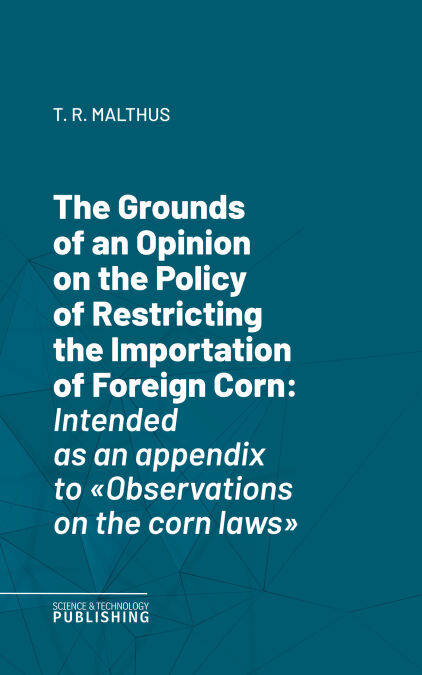
The Grounds of an Opinion on the Policy of Restricting the Importation of Foreign CornIntended as an appendix to "Observations on the corn laws" EBOOK
Thomas Robert Malthus
Ebook | Anglais
19,99 €
+ 19 points
Description
The Grounds of an Opinion on the Policy of Restricting the Importation of Foreign Corn: Intended as an Appendix to 'Observations on the Corn Laws' is a seminal economic treatise authored by Thomas Robert Malthus, one of the most influential thinkers of the early nineteenth century. Published in 1815, this work delves deeply into the contentious debate surrounding the Corn Laws—British legislation that imposed tariffs and restrictions on imported grain. Malthus, renowned for his theories on population and economics, presents a nuanced and meticulously reasoned argument in favor of certain restrictions on the importation of foreign corn, countering the prevailing free-trade sentiments of his contemporaries. In this comprehensive appendix to his earlier Observations on the Corn Laws, Malthus systematically examines the economic, social, and political ramifications of unrestricted grain imports. He explores the delicate balance between agricultural and manufacturing interests, the importance of national food security, and the potential consequences for rural employment and land cultivation. Drawing on empirical data, historical precedent, and logical analysis, Malthus articulates the grounds for his opinion that moderate restrictions are necessary to ensure the stability and prosperity of the British economy. Throughout the text, Malthus addresses the arguments of free-trade advocates, weighing the benefits of cheap food against the risks of undermining domestic agriculture. He considers the impact of fluctuating grain prices on both producers and consumers, and he discusses the broader implications for national independence and resilience in times of crisis. The book is characterized by its clarity of thought, careful reasoning, and balanced perspective, making it an essential contribution to the literature on economic policy and agricultural reform. The Grounds of an Opinion on the Policy of Restricting the Importation of Foreign Corn remains a vital historical document, offering insight into the economic debates that shaped nineteenth-century Britain. It is a must-read for students of economics, history, and political science, as well as anyone interested in the origins and consequences of trade policy.
Spécifications
Parties prenantes
- Auteur(s) :
- Editeur:
Contenu
- Langue:
- Anglais
Caractéristiques
- EAN:
- 9782528100493
- Date de parution :
- 31-08-25
- Format:
- Ebook
- Protection digitale:
- /
- Format numérique:
- ePub


Seulement chez Librairie Club
+ 19 points sur votre carte client de Librairie Club
Cadeau


Les avis
Nous publions uniquement les avis qui respectent les conditions requises. Consultez nos conditions pour les avis.