


- Retrait en 2 heures
- Assortiment impressionnant
- Paiement sécurisé
- Toujours un magasin près de chez vous
- Retrait en 2 heures
- Assortiment impressionnant
- Paiement sécurisé
- Toujours un magasin près de chez vous



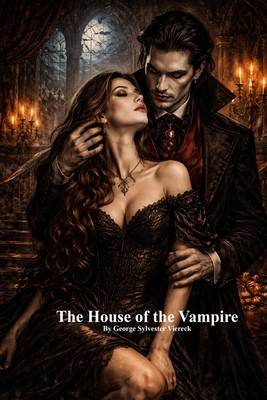
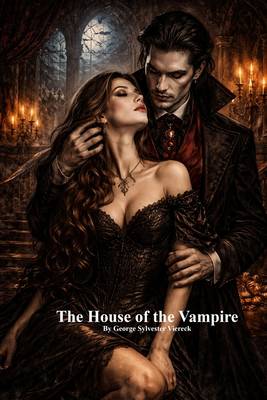
Description
In a world of art and ambition, influence can become something far more insidious.
In The House of the Vampire by George Sylvester Viereck, young writers and artists are drawn into the orbit of Reginald Clarke, a charismatic and enigmatic figure whose presence seems to inspire brilliance in others-while quietly draining it away.
As admiration turns to unease, those closest to him begin to suspect that his power is not merely psychological. Ideas, creativity, even vitality itself appear to fade from those under his influence, as Clarke's own genius grows ever stronger. Yet his charm and authority make him difficult to resist-and even harder to escape.
Moving through salons and intellectual circles, the novel explores the darker side of artistic ambition, where rivalry, envy, and dependence blur into something more predatory. The "vampirism" at its heart is not of blood, but of mind and spirit, raising unsettling questions about the cost of genius and the nature of influence.
Subtle, atmospheric, and psychologically charged, The House of the Vampire offers a haunting portrait of creative power-and the danger of surrendering oneself to it.
Spécifications
Parties prenantes
- Auteur(s) :
- Editeur:
Contenu
- Nombre de pages :
- 100
- Langue:
- Anglais
- Catégorie d'âge:
Caractéristiques
- EAN:
- 9781773565989
- Date de parution :
- 08-04-2026
- Format:
- Livre broché
- Format numérique:
- Trade paperback (VS)
- Dimensions :
- 152 mm x 229 mm
- Poids :
- 145 g


Seulement chez Librairie Club
+ 41 points sur votre carte client de Librairie Club
Cadeau


Les avis
Nous publions uniquement les avis qui respectent les conditions requises. Consultez nos conditions pour les avis.