


- Retrait en 2 heures
- Assortiment impressionnant
- Paiement sécurisé
- Toujours un magasin près de chez vous
- Retrait en 2 heures
- Assortiment impressionnant
- Paiement sécurisé
- Toujours un magasin près de chez vous



121,95 €
+ 243 points
Passer une commande en un clic
Payer en toute sécurité


Livraison en Belgique: 3,99 €
Livraison en magasin gratuite
Description
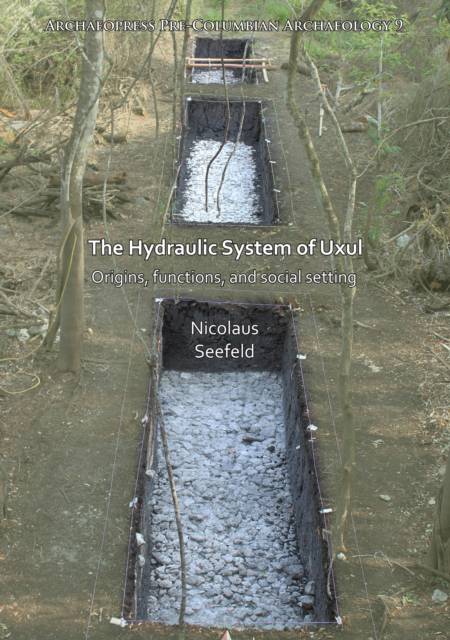
Since the inception of Maya studies, the issue of water supply in Classic Maya society has been a matter of controversial debate. Due to the annually recurring dry seasons the availability of water during this period is and has always been problematic. In the light of these conditions, the fact that the pre-Hispanic Maya were able to establish, developed and maintain prosperous urban centres over long periods is hard to explain. In order to resolve this open issue, this book aims to explain the water management strategies of the Maya in pre-Hispanic times. To this end, this volume analyses the intricate relationship between the natural environment and the adaptation strategies of the pre-Hispanic population, whose physical remains were documented in the form of hydraulic features. A large section of this book discusses the different forms, functions, and the geographic distribution of the published hydraulic features. The main body of this monograph focuses on the archaeological investigation of the hydraulic system of Uxul, a medium-sized Maya centre in the south of the state of Campeche, Mexico. As many open research questions could be addressed and studied in this site, the hydraulic system of Uxul acted as a central point of reference for the evaluation of the socio-political relevance of water management in the Maya Lowlands. This book identifies both the natural causes for water scarcities and the cultural adaptation strategies that were designed to overcome them. Due to this comprehensive approach, the present book is the most extensive and exhaustive account on the hydraulic features of the Maya Lowlands and thus enables representative statements on the sociopolitical relevance of water management in Classic Maya society.
Spécifications
Parties prenantes
- Auteur(s) :
- Editeur:
Contenu
- Nombre de pages :
- 540
- Langue:
- Anglais
- Collection :
- Tome:
- n° 9
Caractéristiques
- EAN:
- 9781784919290
- Date de parution :
- 30-09-18
- Format:
- Livre broché
- Format numérique:
- Trade paperback (VS)
- Dimensions :
- 204 mm x 290 mm
- Poids :
- 2013 g


Seulement chez Librairie Club
+ 243 points sur votre carte client de Librairie Club
Cadeau

Cadeau


Les avis
Nous publions uniquement les avis qui respectent les conditions requises. Consultez nos conditions pour les avis.