


- Retrait en 2 heures
- Assortiment impressionnant
- Paiement sécurisé
- Toujours un magasin près de chez vous
- Retrait en 2 heures
- Assortiment impressionnant
- Paiement sécurisé
- Toujours un magasin près de chez vous



Description
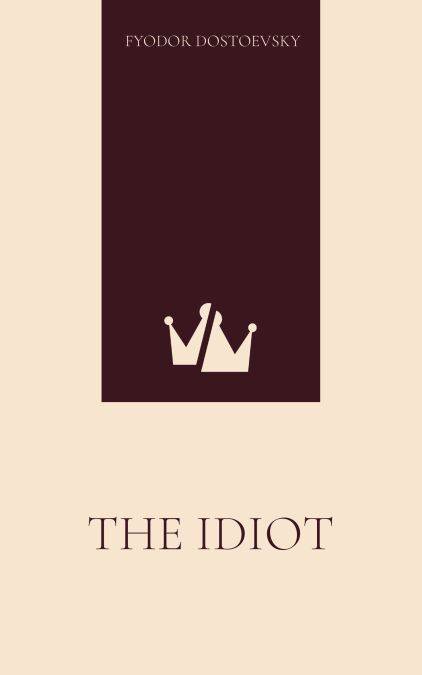
A profound exploration of innocence, morality, and the tragic complexity of human nature, The Idiot by Fyodor Dostoevsky is one of the most powerful and psychologically penetrating novels in world literature. At its heart stands Prince Lev Nikolayevich Myshkin, a man whose boundless compassion, honesty, and spiritual purity set him apart in a society driven by ambition, vanity, and self-interest.
Returning to Russia after years in a Swiss sanatorium, where he was treated for epilepsy, Prince Myshkin enters the glittering yet morally fragile world of St. Petersburg high society. His openness and sincerity are so unusual that many mistake them for foolishness—hence the title by which others dismiss him. Yet beneath this perceived simplicity lies a rare depth of empathy and moral clarity. Myshkin sees into the hearts of those around him, recognizing their suffering even when they cannot acknowledge it themselves.
The prince becomes entangled in a turbulent emotional triangle involving two strikingly different women: the proud and tormented Nastasya Filippovna, whose beauty is shadowed by scandal and inner anguish, and the gentle, idealistic Aglaya Epanchin, who is drawn to Myshkin's integrity and spiritual depth. As he attempts to offer compassion and redemption, Myshkin finds himself pulled into a web of jealousy, pride, obsession, and destructive passion.
Through a vivid cast of characters—each wrestling with ambition, insecurity, and moral conflict—Dostoevsky constructs a powerful portrait of a society in spiritual crisis. Wealth and status mask profound emptiness; love becomes intertwined with possession and pride; and kindness is often met with suspicion or cruelty. The novel poses a daring question: What would happen if a truly good and selfless person were placed in a flawed and cynical world? Is pure goodness a strength—or a vulnerability?
Rich in philosophical reflection and psychological insight, The Idiot delves into themes of faith, suffering, free will, and redemption. Myshkin's epilepsy serves not only as a physical condition but also as a symbolic lens through which he experiences moments of transcendent clarity and profound fragility. His presence exposes the moral contradictions of those around him, illuminating both their potential for grace and their capacity for destruction.
Dostoevsky's narrative moves between intense emotional confrontations and quiet introspection, capturing the turbulence of the human soul with remarkable depth. The novel's tragic trajectory underscores the tension between idealism and reality, suggesting that absolute innocence may be unsustainable in a world governed by ego and desire.
Haunting, compassionate, and deeply philosophical, The Idiot remains a timeless meditation on goodness in the face of corruption. It challenges readers to reconsider their understanding of strength, wisdom, and what it truly means to be wise in a broken world.
Returning to Russia after years in a Swiss sanatorium, where he was treated for epilepsy, Prince Myshkin enters the glittering yet morally fragile world of St. Petersburg high society. His openness and sincerity are so unusual that many mistake them for foolishness—hence the title by which others dismiss him. Yet beneath this perceived simplicity lies a rare depth of empathy and moral clarity. Myshkin sees into the hearts of those around him, recognizing their suffering even when they cannot acknowledge it themselves.
The prince becomes entangled in a turbulent emotional triangle involving two strikingly different women: the proud and tormented Nastasya Filippovna, whose beauty is shadowed by scandal and inner anguish, and the gentle, idealistic Aglaya Epanchin, who is drawn to Myshkin's integrity and spiritual depth. As he attempts to offer compassion and redemption, Myshkin finds himself pulled into a web of jealousy, pride, obsession, and destructive passion.
Through a vivid cast of characters—each wrestling with ambition, insecurity, and moral conflict—Dostoevsky constructs a powerful portrait of a society in spiritual crisis. Wealth and status mask profound emptiness; love becomes intertwined with possession and pride; and kindness is often met with suspicion or cruelty. The novel poses a daring question: What would happen if a truly good and selfless person were placed in a flawed and cynical world? Is pure goodness a strength—or a vulnerability?
Rich in philosophical reflection and psychological insight, The Idiot delves into themes of faith, suffering, free will, and redemption. Myshkin's epilepsy serves not only as a physical condition but also as a symbolic lens through which he experiences moments of transcendent clarity and profound fragility. His presence exposes the moral contradictions of those around him, illuminating both their potential for grace and their capacity for destruction.
Dostoevsky's narrative moves between intense emotional confrontations and quiet introspection, capturing the turbulence of the human soul with remarkable depth. The novel's tragic trajectory underscores the tension between idealism and reality, suggesting that absolute innocence may be unsustainable in a world governed by ego and desire.
Haunting, compassionate, and deeply philosophical, The Idiot remains a timeless meditation on goodness in the face of corruption. It challenges readers to reconsider their understanding of strength, wisdom, and what it truly means to be wise in a broken world.
Spécifications
Parties prenantes
- Auteur(s) :
- Editeur:
Contenu
- Nombre de pages :
- 844
- Langue:
- Anglais
Caractéristiques
- EAN:
- 9784238100091
- Date de parution :
- 26-02-26
- Format:
- Ebook
- Protection digitale:
- Digital watermarking
- Format numérique:
- ePub


Seulement chez Librairie Club
Cadeau


Les avis
Nous publions uniquement les avis qui respectent les conditions requises. Consultez nos conditions pour les avis.