


- Retrait en 2 heures
- Assortiment impressionnant
- Paiement sécurisé
- Toujours un magasin près de chez vous
- Retrait en 2 heures
- Assortiment impressionnant
- Paiement sécurisé
- Toujours un magasin près de chez vous



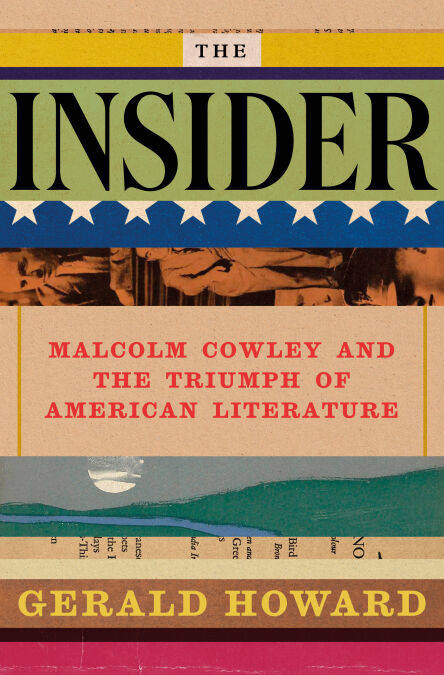
The Insider EBOOK
Malcolm Cowley and the Triumph of American Literature
Gerald Howard
Ebook | Anglais
17,34 €
+ 17 points
Format
Description
A finalist for the 2026 Andrew Carnegie Medal for Excellence in Nonfiction • Named a Best Book of the Year by The New Yorker
A delightful and majestic reckoning with the ascent of American fiction in the twentieth century through the prism of the under-known man who had an astonishing amount to do with it
Malcolm Cowley is not a household name today, but the American literary canon would look very different without him. A prototypical “man of letters” of his generation—Harvard University, a volunteer in the French ambulance corps in World War I, a rite of passage in Paris after the war—he became one of the few truly influential critics of the 1920s and ’30s, along with his close New Republic colleague Edmund Wilson. Cowley’s early support of Hemingway, Fitzgerald, and their set—and indeed for framing this group in generational terms in the first place—secured his place in literary history.
Most people are lucky to be part of a single game-changing era in their careers; for Cowley, it happened again and again. After emerging from the political fray of the thirties badly damaged, he retreated behind the scenes as a tastemaker whose import has awaited Gerald Howard to be brought into full view. The process of canon formation is a murky business, and Cowley was a prime mover in it for the better part of four decades, through the Lost Generation, the Beat Generation, and the counterculture of the sixties. Without him, the odds would be much longer that the names William Faulkner, Jack Kerouac, and Ken Kesey, to name just three, would have ever echoed.
In The Insider, Gerald Howard gives an intimate accounting of the fever graph of a fascinating and multifaceted career in the literary trade that uses that career to tell a much bigger story of how American literature took the course that it did from the 1920s to the 1960s. It’s a story of an art form, and an industry, and a country experiencing wrenching change, and the people who made a home in the storm and in no small part shaped it. Howard’s own career as a literary weathermaker is justly acclaimed, and he has brought all his talents of head and heart to bear in crafting this extraordinary book. It’s a gift to booklovers and a major contribution to the cultural history of this country.
A delightful and majestic reckoning with the ascent of American fiction in the twentieth century through the prism of the under-known man who had an astonishing amount to do with it
Malcolm Cowley is not a household name today, but the American literary canon would look very different without him. A prototypical “man of letters” of his generation—Harvard University, a volunteer in the French ambulance corps in World War I, a rite of passage in Paris after the war—he became one of the few truly influential critics of the 1920s and ’30s, along with his close New Republic colleague Edmund Wilson. Cowley’s early support of Hemingway, Fitzgerald, and their set—and indeed for framing this group in generational terms in the first place—secured his place in literary history.
Most people are lucky to be part of a single game-changing era in their careers; for Cowley, it happened again and again. After emerging from the political fray of the thirties badly damaged, he retreated behind the scenes as a tastemaker whose import has awaited Gerald Howard to be brought into full view. The process of canon formation is a murky business, and Cowley was a prime mover in it for the better part of four decades, through the Lost Generation, the Beat Generation, and the counterculture of the sixties. Without him, the odds would be much longer that the names William Faulkner, Jack Kerouac, and Ken Kesey, to name just three, would have ever echoed.
In The Insider, Gerald Howard gives an intimate accounting of the fever graph of a fascinating and multifaceted career in the literary trade that uses that career to tell a much bigger story of how American literature took the course that it did from the 1920s to the 1960s. It’s a story of an art form, and an industry, and a country experiencing wrenching change, and the people who made a home in the storm and in no small part shaped it. Howard’s own career as a literary weathermaker is justly acclaimed, and he has brought all his talents of head and heart to bear in crafting this extraordinary book. It’s a gift to booklovers and a major contribution to the cultural history of this country.
Spécifications
Parties prenantes
- Auteur(s) :
- Editeur:
Contenu
- Nombre de pages :
- 544
- Langue:
- Anglais
Caractéristiques
- EAN:
- 9780525522065
- Date de parution :
- 03-11-25
- Format:
- Ebook
- Protection digitale:
- Adobe DRM
- Format numérique:
- ePub


Seulement chez Librairie Club
+ 17 points sur votre carte client de Librairie Club
Cadeau


Les avis
Nous publions uniquement les avis qui respectent les conditions requises. Consultez nos conditions pour les avis.