


En raison d'une grève chez bpost, des retards de livraison peuvent survenir. Besoin de quelque chose en urgence ? Optez pour un retrait en magasin ou rendez-vous dans une Librairie Club à proximité.
- Retrait en 2 heures
- Assortiment impressionnant
- Paiement sécurisé
- Toujours un magasin près de chez vous
En raison d'une grève chez bpost, des retards de livraison peuvent survenir. Besoin de quelque chose en urgence ? Optez pour un retrait en magasin ou rendez-vous dans une Librairie Club à proximité.
- Retrait en 2 heures
- Assortiment impressionnant
- Paiement sécurisé
- Toujours un magasin près de chez vous




45,95 €
+ 91 points
Description
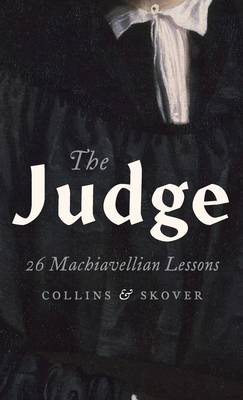
There is no book of political strategy more canonical than Niccolò Machiavelli's The Prince, but few ethicists would advise policymakers to treat it as a bible. The lofty ideals of the law, especially, seem distant from the values that the word "Machiavellian" connotes, and judges are supposed to work above the realm of politics. In The Judge, however, Ronald Collins and David Skover argue that Machiavelli can indeed speak to judges, and model their book after The Prince. As it turns out, the number of people who think that judges in the U.S. are apolitical has been shrinking for decades. Both liberals and conservatives routinely criticize their ideological opponents on the bench for acting politically. Some authorities even posit the impossibility of apolitical judges, and indeed, in many states, judicial elections are partisan. Others advocate appointing judges who are committed to being dispassionate referees adhering to the letter of the law. However, most legal experts, regardless of their leanings, seem to agree that despite widespread popular support for the ideal of the apolitical judge, this ideal is mere fantasy. This debate about judges and politics has been a perennial in American history, but it intensified in the 1980s, when the Reagan administration sought to place originalists in the Supreme Court. It has not let up since. Ronald Collins and David Skover argue that the debate has become both stale and circular, and instead tackle the issue in a boldly imaginative way. In The Judge, they ask us to assume that judges are political, and that they need advice on how to be effective political actors. Their twenty-six chapters track the structure of The Prince, and each provides pointers to judges on how to cleverly and subtly advance their political goals. In this Machiavellian vision, law is inseparable from realpolitik. However, the authors' point isn't to advocate for this coldly realistic vision of judging. Their ultimate goal is identify both legal realists and originalists as what they are: explicitly political (though on opposite ends of the ideological spectrum). Taking its cues from Machiavelli, The Judge describes what judges actually do, not what they ought to do.
Spécifications
Parties prenantes
- Auteur(s) :
- Editeur:
Contenu
- Nombre de pages :
- 296
- Langue:
- Anglais
Caractéristiques
- EAN:
- 9780190490140
- Date de parution :
- 03-10-2017
- Format:
- Livre relié
- Format numérique:
- Genaaid
- Dimensions :
- 175 mm x 244 mm
- Poids :
- 657 g


Seulement chez Librairie Club
+ 91 points sur votre carte client de Librairie Club
Cadeau


Les avis
Nous publions uniquement les avis qui respectent les conditions requises. Consultez nos conditions pour les avis.