


- Retrait en 2 heures
- Assortiment impressionnant
- Paiement sécurisé
- Toujours un magasin près de chez vous
- Retrait en 2 heures
- Assortiment impressionnant
- Paiement sécurisé
- Toujours un magasin près de chez vous



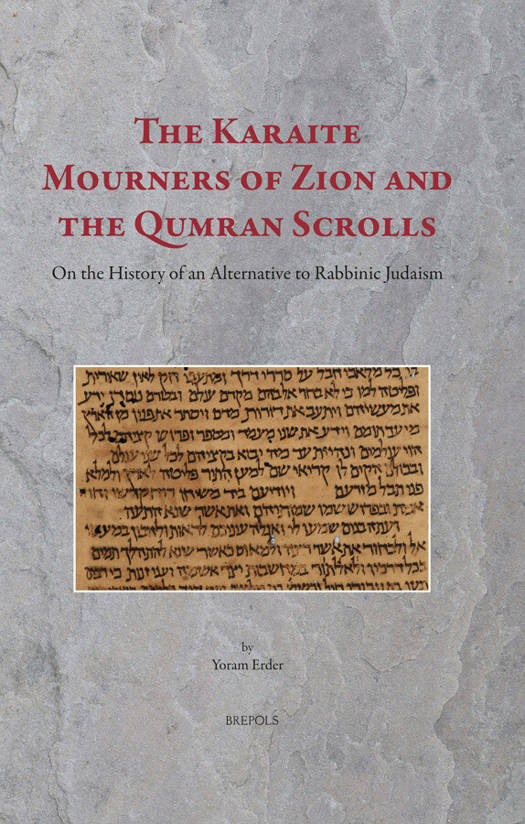
The Karaite Mourners of Zion and the Qumran Scrolls
On the History of an Alternative to Rabbinic Judaism
Yoram Erder
111,30 €
+ 222 points
Description
This book is dedicated to studying the Karaite Mourners of Zion-the leading faction within the Karaite movement during its formative period (9th - 11th century). Like all Karaites, the Mourners claimed that the Rabbinic Oral Law was not given by God but is rather the 'commandment of man' (Isaiah 29.13). Therefore they called for a return to the Hebrew Bible. According to the Karaite Mourners, neglecting the Bible caused also the neglect of the Land of Israel. For them the Oral Law was a tool of the Jewish people to strike roots in the exile. Therefore they developed a Messianic doctrine which encouraged the Jewish people not only to return to the Bible, but also to immigrate to the Land of Israel in order to accelerate the redemption. The Karaite Mourners' leadership practiced what they preached. From their cradle in the exile of Babylonia and Persia they came to Jerusalem, where they created a community that was called Shoshanim (lilies). This community became the most important community that ever flourished in the history of Karaism. They left behind prolific work, most of it written in Judaeo-Arabic. Coming to Palestine, and maybe before that, the Karaite Mourners were exposed to some of the Qumran scrolls that were discovered at their time. They did not hesitate to adopt some of the Qumran doctrine and halakha, despite the fact that main Qumran beliefs were not acceptable to the Karaites. Studying the Qumranic influence on the Karaite Mourners sheds light simultaneously on early Karaism and the Jewish sects of the Second Temple period.
Spécifications
Parties prenantes
- Auteur(s) :
- Editeur:
Contenu
- Nombre de pages :
- 483
- Langue:
- Anglais
- Collection :
- Tome:
- n° 3
Caractéristiques
- EAN:
- 9782503543369
- Date de parution :
- 22-12-17
- Format:
- Livre relié
- Format numérique:
- Genaaid
- Dimensions :
- 156 mm x 234 mm
- Poids :
- 965 g


Seulement chez Librairie Club
+ 222 points sur votre carte client de Librairie Club
Cadeau


Les avis
Nous publions uniquement les avis qui respectent les conditions requises. Consultez nos conditions pour les avis.