Club utilise des cookies et des technologies similaires pour faire fonctionner correctement le site web et vous fournir une meilleure expérience de navigation.
Ci-dessous vous pouvez choisir quels cookies vous souhaitez modifier :
Club utilise des cookies et des technologies similaires pour faire fonctionner correctement le site web et vous fournir une meilleure expérience de navigation.
Nous utilisons des cookies dans le but suivant :
Assurer le bon fonctionnement du site web, améliorer la sécurité et prévenir la fraude
Avoir un aperçu de l'utilisation du site web, afin d'améliorer son contenu et ses fonctionnalités
Pouvoir vous montrer les publicités les plus pertinentes sur des plateformes externes
Club utilise des cookies et des technologies similaires pour faire fonctionner correctement le site web et vous fournir une meilleure expérience de navigation.
Ci-dessous vous pouvez choisir quels cookies vous souhaitez modifier :
Cookies techniques et fonctionnels
Ces cookies sont indispensables au bon fonctionnement du site internet et vous permettent par exemple de vous connecter. Vous ne pouvez pas désactiver ces cookies.
Cookies analytiques
Ces cookies collectent des informations anonymes sur l'utilisation de notre site web. De cette façon, nous pouvons mieux adapter le site web aux besoins des utilisateurs.
Cookies marketing
Ces cookies partagent votre comportement sur notre site web avec des parties externes, afin que vous puissiez voir des publicités plus pertinentes de Club sur des plateformes externes.
Une erreur est survenue, veuillez réessayer plus tard.
Il y a trop d’articles dans votre panier
Vous pouvez encoder maximum 250 articles dans votre panier en une fois. Supprimez certains articles de votre panier ou divisez votre commande en plusieurs commandes.
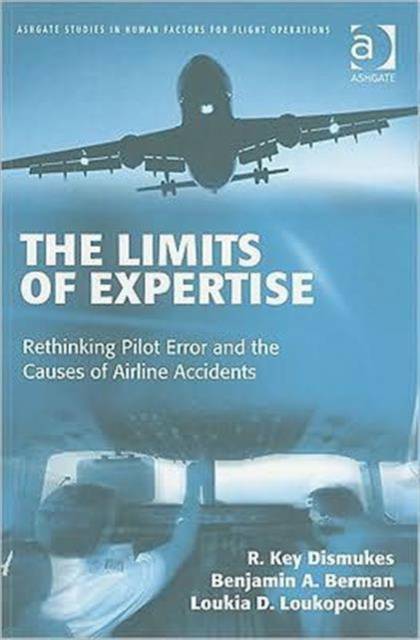
Why would highly skilled, well-trained pilots make errors that lead to accidents when they had safely completed many thousands of previous flights? The majority of all aviation accidents are attributed primarily to human error, but this is often misinterpreted as evidence of lack of skill, vigilance, or conscientiousness of the pilots. The Limits of Expertise is a fresh look at the causes of pilot error and aviation accidents, arguing that accidents can be understood only in the context of how the overall aviation system operates. The authors analyzed in great depth the 19 major U.S. airline accidents from 1991-2000 in which the National Transportation Safety Board (NTSB) found crew error to be a causal factor. Each accident is reviewed in a separate chapter that examines events and crew actions and explores the cognitive processes in play at each step. The approach is guided by extensive evidence from cognitive psychology that human skill and error are opposite sides of the same coin. The book examines the ways in which competing task demands, ambiguity and organizational pressures interact with cognitive processes to make all experts vulnerable to characteristic forms of error. The final chapter identifies themes cutting across the accidents, discusses the role of chance, criticizes simplistic concepts of causality of accidents, and suggests ways to reduce vulnerability to these catastrophes. The authors' complementary experience allowed a unique approach to the study: accident investigation with the NTSB, cognitive psychology research both in the lab and in the field, enormous first-hand experience of piloting, and application of aviation psychology in both civil and military operations. This combination allowed the authors to examine and explain the domain-specific aspects of aviation operations and to extend advances in basic research in cognition to complex issues of human performance in the real world. Although The Limits of Expertise is directed to aviation operations, the implications are clear for understanding the decision processes, skilled performance and errors of professionals in many domains, including medicine.