


- Retrait en 2 heures
- Assortiment impressionnant
- Paiement sécurisé
- Toujours un magasin près de chez vous
- Retrait gratuit dans votre magasin Club
- 7.000.0000 titres dans notre catalogue
- Payer en toute sécurité
- Toujours un magasin près de chez vous



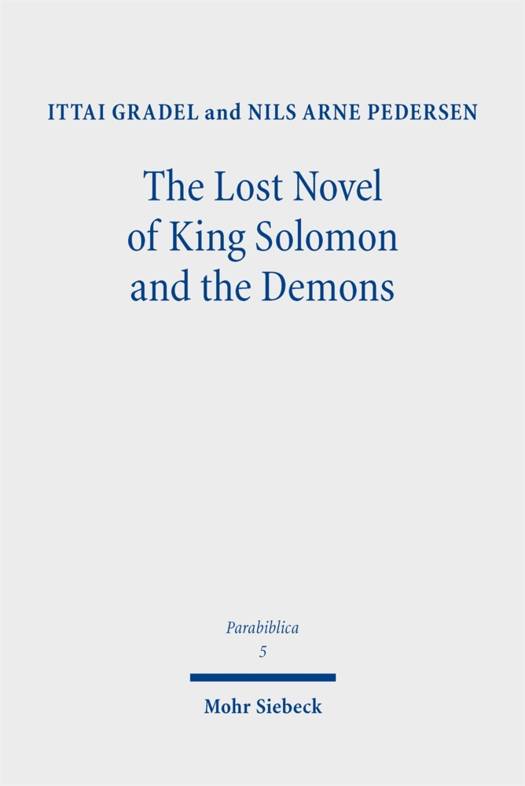
The Lost Novel of King Solomon and the Demons
New Evidence on the Testament of Solomon in Antiquity
Ittai Gradel, Nils Arne Pedersen
104,45 €
+ 208 points
Description
English summary: In this study, Ittai Gradel and Nils Arne Pedersen develop a new approach to the apocryphal Testament of Solomon by combining archaeology and textual analysis. The starting point is a group of ten 3rd-century rings, each inscribed in Greek: "Solomon says: 'Watch out!'" The phrase, puzzling as an apotropaic formula, makes sense only in light of the Testament of Solomon, where the king, empowered by a divine ring, subjugates demons. In a climactic episode, Solomon orders two demons to support a massive column until the Day of Judgment - precisely with the words "Watch out!" This unique command, permanently binding the demons, explains its adoption in everyday magical practice. The rings, securely dated, establish a 2nd-century date for the original version of the text and invite new reflections on its literary shape and development. While the preserved Testament alternates between first-person and third-person narration, the inscriptions suggest that the original form was a longer third-person narrative later abbreviated and reworked. From this basis, the authors develop a theory of its redactional history. The evidence points toward popular Christianity distinct from the patristic mainstream. Several rings display Christian iconography, one was linked to the pilgrimage site of Abu Mena, and parallels to Jewish Solomonic traditions are also apparent. Alexandria emerges as a plausible place of origin. The interdisciplinary synthesis - archaeology, history of religions, apocryphal studies, and folklore - generates fresh perspectives. The appendices enrich this contribution with translations of previously inaccessible versions of the Testament of Solomon, including one that contains a newly attested agraphon ascribed to Jesus, as well as a new edition and translation of a Syriac narrative. In this way, the authors significantly reposition the Testament of Solomon within the history of ancient religion and literature. German description: Ittai Gradel und Nils Arne Pedersen eroffnen einen neuen Zugang zum apokryphen Testament Salomos durch die Verbindung von Archaologie und Textforschung. Ausgangspunkt sind zehn Ringe aus dem 3. Jahrhundert n. Chr., die alle die griechische Inschrift "Solomon legei: phylaxai" - "Salomo sagt: 'Pass auf!'" tragen. Diese apotropaische Formel erschliesst sich nur im Zusammenhang des Testament Salomos, in dem der Konig mit einem von Gott verliehenen Ring Macht uber die Damonen erhalt. In einer zentralen Szene zwingt er zwei Damonen mit dem Befehl "Pass auf!" eine Saule bis zum Jungsten Tag zu stutzen. Gerade diese Szene erhielt bleibende Bedeutung und erklart den magischen Gebrauch der Formel. Die datierbaren Funde liefern einen terminus ante quem fur den Text und eroffnen neue Uberlegungen zu seiner literarischen Gestalt: Wahrend das uberlieferte Testament zwischen Erzahlform in erster und dritter Person wechselt, legen die Inschriften nahe, dass eine ursprungliche Fassung in der dritten Person vorlag, die spater uberarbeitet wurde. Daraus entwickeln die Autoren eine Theorie der Redaktionsgeschichte. Daruber hinaus zeigt sich ein enger Bezug zur Volksfrommigkeit des fruhen Christentums, abseits patristischer Eliten. Die christliche Ikonographie auf mehreren Ringen, der Fundkontext von Abu Mena und die Einbindung judischer Salomo-Traditionen sprechen fur einen Entstehungsort im christlichen Alexandria. Mit ihrer interdisziplinaren Verknupfung von Archaologie, Religionsgeschichte, Apokryphenforschung und Folklore gelangen die Autoren zu neuen Einsichten. Die Anhange enthalten Ubersetzungen bislang unveroffentlichter Versionen des Testament Salomos, darunter ein neu bezeugtes agraphon, sowie eine kritische Edition einer syrischen Paralleluberlieferung. Damit entsteht eine grundlegende Neupositionierung des Textes innerhalb der antiken Religions- und Literaturgeschichte.
Spécifications
Parties prenantes
- Auteur(s) :
- Editeur:
Contenu
- Nombre de pages :
- 300
- Langue:
- Anglais
- Collection :
Caractéristiques
- EAN:
- 9783162000668
- Date de parution :
- 31-01-26
- Format:
- Livre relié
- Format numérique:
- Genaaid
- Dimensions :
- 170 mm x 239 mm
- Poids :
- 557 g



Seulement chez Librairie Club
+ 208 points sur votre carte client de Librairie Club
Cadeau

Cadeau


Les avis
Nous publions uniquement les avis qui respectent les conditions requises. Consultez nos conditions pour les avis.