


En raison d'une grève chez bpost, des retards de livraison peuvent survenir. Besoin de quelque chose en urgence ? Optez pour un retrait en magasin ou rendez-vous dans une Librairie Club à proximité.
- Retrait en 2 heures
- Assortiment impressionnant
- Paiement sécurisé
- Toujours un magasin près de chez vous
En raison d'une grève chez bpost, des retards de livraison peuvent survenir. Besoin de quelque chose en urgence ? Optez pour un retrait en magasin ou rendez-vous dans une Librairie Club à proximité.
- Retrait en 2 heures
- Assortiment impressionnant
- Paiement sécurisé
- Toujours un magasin près de chez vous



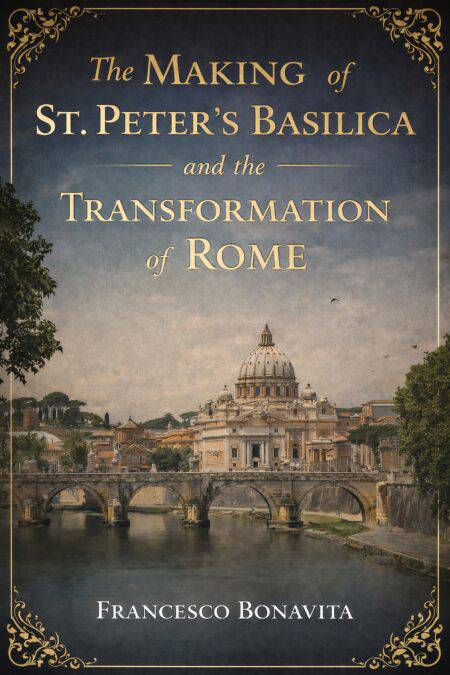
The Making of St. Peter's Basilica and the Transformation of Rome EBOOK
Francesco Bonavita
Ebook | Anglais
5,49 €
+ 5 points
Description
The Making of St. Peter's Basilica and the Transformation of Rome presents a compelling account of one of the world's most extraordinary architectural achievements. Over the course of two millennia, St. Peter's Basilica has stood not only as a symbol of enduring Christian faith, but also as a testament to humanity's creative resilience in times of challenge and transformation. The work traces the origins of the Basilica to the fourth century CE, when it arose upon the site of an ancient Roman arena and necropolis, and examines the decisive role of Emperor Constantine in shaping the destiny of early Christianity. The original basilica, which endured for nearly a thousand years, bore witness to the unfolding dramas of the Middle Ages, culminating in a period of profound crisis within the Church. With the advent of the Renaissance came a renewed spirit of innovation that led to the complete reimagining of the Basilica, alongside an ambitious transformation of the city of Rome itself. Visionary popes - among them Nicholas V and Julius II - together with towering artistic figures such as Bramante, Raphael, Michelangelo, and Bernini, endowed both the Basilica and the city with a legacy of enduring grandeur. Although this monumental undertaking placed immense financial strain on the Church and contributed to the division between Protestants and Catholics, it ultimately gave rise to a profound transformation. The result was not only a religious monument of unparalleled spiritual significance, but also an unprecedented urban renewal that continues to shape Rome and inspire the world.
Spécifications
Parties prenantes
- Auteur(s) :
- Editeur:
Contenu
- Langue:
- Anglais
Caractéristiques
- EAN:
- 9798232236694
- Date de parution :
- 19-04-26
- Format:
- Ebook
- Protection digitale:
- /
- Format numérique:
- ePub


Seulement chez Librairie Club
+ 5 points sur votre carte client de Librairie Club
Cadeau


Les avis
Nous publions uniquement les avis qui respectent les conditions requises. Consultez nos conditions pour les avis.