


- Retrait en 2 heures
- Assortiment impressionnant
- Paiement sécurisé
- Toujours un magasin près de chez vous
- Retrait gratuit dans votre magasin Club
- 7.000.0000 titres dans notre catalogue
- Payer en toute sécurité
- Toujours un magasin près de chez vous



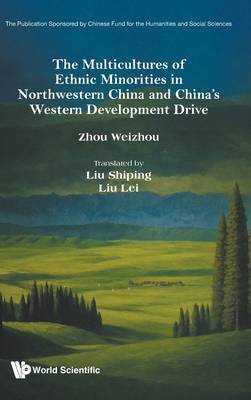
The Multicultures of Ethnic Minorities in Northwestern China and China's Western Development Drive
Weizhou Zhou
Livre relié | Anglais
184,95 €
+ 369 points
Description
The book focuses on the multicultures of the ethnic minorities in northwestern China (EMNC). It explores the development and changes of these cultures in the new context of China's Western Development Drive. In other words, the book discusses the modernization of these multicultures and their reconstruction. The multicultures of the EMNC mentioned in the book fall into the categories of regional cultures and ethnic cultures. It specifically refers to the cultures of the five provincial-level regions in northwestern China (Shaanxi Province, Gansu Province, Ningxia Hui Autonomous Region, Qinghai Province, and Xinjiang Uygur Autonomous Region) and the cultures of the ten-plus ethnic minorities (non-Han populations) settled in these regions. Northwestern China has been home to many settled ethnic minorities since ancient times. Therefore, the cultures of this region, instead of being unitary, boast diversity and pluralism. Influenced by neighboring ethnic cultures, the birth and development of each EMNC culture are the fruit of multicultural integration. It could be said that each ethnic minority culture in the region has a 'diverse' origin.The multicultures of the EMNC, their relationship to China's Western Development Drive in particular, is a profound theoretical and practical issue concerning the measures adopted by China to facilitate the modernization of these diverse EMNC cultures. Besides, it is of vital importance to their cultural development and ethical progress. It even has a bearing on social stability and economic growth. What's more, the transformation of these diverse ethnic cultures and the construction of new contemporary multicultures of the EMNC are required as they are the inevitable trends and prerequisites for advancing and achieving the goal of the development drive of western China. Therefore, the study on the relationship between the multicultures of the EMNC and China's Western Development Drive is of great theoretical and practical significance.
Spécifications
Parties prenantes
- Auteur(s) :
- Traducteur(s):
- Editeur:
Contenu
- Nombre de pages :
- 368
- Langue:
- Anglais
Caractéristiques
- EAN:
- 9789819824014
- Date de parution :
- 29-01-26
- Format:
- Livre relié
- Format numérique:
- Genaaid


Seulement chez Librairie Club
+ 369 points sur votre carte client de Librairie Club

Les avis
Nous publions uniquement les avis qui respectent les conditions requises. Consultez nos conditions pour les avis.