


- Retrait en 2 heures
- Assortiment impressionnant
- Paiement sécurisé
- Toujours un magasin près de chez vous
- Retrait en 2 heures
- Assortiment impressionnant
- Paiement sécurisé
- Toujours un magasin près de chez vous



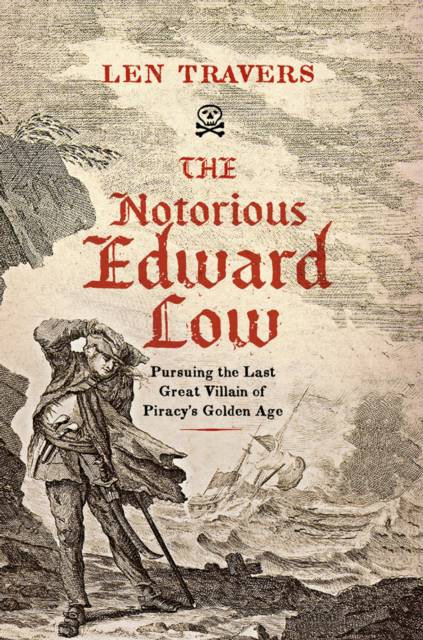
The Notorious Edward Low
Pursuing the Last Great Villain of Piracy's Golden Age
Len Travers
Livre broché | Anglais
37,95 €
+ 75 points
Description
Following the War of the Spanish Succession (1702-1713)--generally known in the Americas as Queen Anne's War--a dramatic, decade-long wave of sea-robbery plagued the Atlantic rim. Often glamorized as the "Golden Age of Piracy," that period saw such colorful pirate leaders as Edward "Blackbeard" Teach, Charles Vane, and "Calico Jack" Rackham and his henchwomen Anne Bonney and Mary Read. Outdoing any of these, a Boston-based laborer, Edward Low, left his mark on pirate history as a "monster," the most vicious and sadistic raider of them all. Low's reputation, and those of the other pirates of the time, was crafted through newspaper accounts and popular literature, most notably The General History of the Pyrates, first published in 1724. Romanticized as anti-heroes and egalitarians in a monarchical world who had liberated themselves from the constraints of law and society ashore, these marauders came to enjoy an immortality bestowed upon them by generations of historians, novelists, and moviemakers. That persistent gloss masks a more sordid reality.
In The Notorious Edward Low: Pursuing the Last Great Villain of Piracy's Golden Age, historian Len Travers reexamines this critical period through the career of Low, a complicated pirate leader, and his nemesis, Peter Solgard, captain of the Royal Navy warship HMS Greyhound. By the time Solgard, aboard Greyhound, was tracking Low in 1723, the era's other notable pirates were gone--dead, captured, or disappeared. Drawing on previously unpublished Admiralty records and consulting both contemporary and modern chroniclers, Travers directs readers to much powerful testimony minimized in or excluded from histories of piracy's "Golden Age," leveling a critical eye at familiar sources too long accepted at face value. Travers demonstrates that, feared as they certainly were, pirates were largely ordinary seamen trapped in desperate circumstances who, in the end, had little to show for their efforts. Contrary to popular portrayals, for pirates the second decade of the eighteenth century was a time of radically diminishing returns, scant treasure, buried or otherwise, and increasingly successful suppression by state authorities. One by one, safe havens shut out the sea-rovers, who with their depredations in America quickly squandered the sympathy and support they had once enjoyed among common folk. The Notorious Edward Low puts individual actors, from colonial governors to captains to common seamen, at center stage, and reveals how British authorities used new anti-piracy laws to reclaim a measure of authority over their fractious North American colonies--a compelling and meaningful story with its own brand of true-life swashbuckling on the high seas.
In The Notorious Edward Low: Pursuing the Last Great Villain of Piracy's Golden Age, historian Len Travers reexamines this critical period through the career of Low, a complicated pirate leader, and his nemesis, Peter Solgard, captain of the Royal Navy warship HMS Greyhound. By the time Solgard, aboard Greyhound, was tracking Low in 1723, the era's other notable pirates were gone--dead, captured, or disappeared. Drawing on previously unpublished Admiralty records and consulting both contemporary and modern chroniclers, Travers directs readers to much powerful testimony minimized in or excluded from histories of piracy's "Golden Age," leveling a critical eye at familiar sources too long accepted at face value. Travers demonstrates that, feared as they certainly were, pirates were largely ordinary seamen trapped in desperate circumstances who, in the end, had little to show for their efforts. Contrary to popular portrayals, for pirates the second decade of the eighteenth century was a time of radically diminishing returns, scant treasure, buried or otherwise, and increasingly successful suppression by state authorities. One by one, safe havens shut out the sea-rovers, who with their depredations in America quickly squandered the sympathy and support they had once enjoyed among common folk. The Notorious Edward Low puts individual actors, from colonial governors to captains to common seamen, at center stage, and reveals how British authorities used new anti-piracy laws to reclaim a measure of authority over their fractious North American colonies--a compelling and meaningful story with its own brand of true-life swashbuckling on the high seas.
Spécifications
Parties prenantes
- Auteur(s) :
- Editeur:
Contenu
- Nombre de pages :
- 256
- Langue:
- Anglais
Caractéristiques
- EAN:
- 9781594164569
- Date de parution :
- 26-09-25
- Format:
- Livre broché
- Format numérique:
- Trade paperback (VS)
- Dimensions :
- 152 mm x 229 mm
- Poids :
- 453 g


Seulement chez Librairie Club
+ 75 points sur votre carte client de Librairie Club
Cadeau


Les avis
Nous publions uniquement les avis qui respectent les conditions requises. Consultez nos conditions pour les avis.