


- Retrait en 2 heures
- Assortiment impressionnant
- Paiement sécurisé
- Toujours un magasin près de chez vous
- Retrait en 2 heures
- Assortiment impressionnant
- Paiement sécurisé
- Toujours un magasin près de chez vous



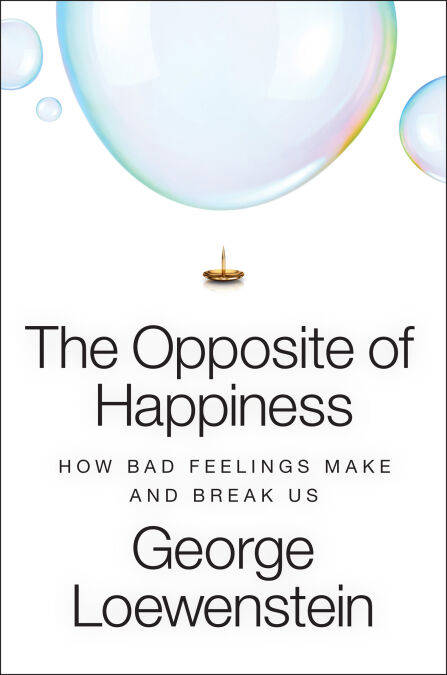
The Opposite of Happiness EBOOK
How Bad Feelings Make and Break Us
George Loewenstein
Ebook | Anglais
15,49 €
+ 15 points
Format
Description
'When you finish, you'll know yourself better, you'll understand the people you care about better' ANGELA DUCKWORTH, author of Grit
'Teeming with wisdom, insight, empathy, and sparkle. One of the best books I have ever read' CASS R. SUSNSTEIN, co-author of Noise
A founding father of behavioural economics reveals the hidden logic of negative emotions with a clarity and humour that make our worst feelings strangely easier to bear.
Every age has its illusions. Ours is that happiness is the natural human condition. Behavioural economist George Loewenstein argues the opposite: that our lives are inextricably shaped by the darker emotions we spend so much time trying to avoid.
In The Opposite of Happiness, he draws on decades of influential research—as well as insights from literature and from his own life experiences—to offer a tour de force reexamination of the role negative emotions play in our lives: why pain is stickier than pleasure, how the modern world makes bad feelings worse, and why our attempts to escape misery usually only sharpen its sting. Those who struggle to find and sustain happiness are not unlucky or flawed, he argues, but merely human, suffering the slings and arrows of an inherently negative nature. This knowledge comes, however, not as a bitter pill but as much-needed solace for anyone navigating the frustrations and heartbreaks of modern life.
In this fascinating deconstruction of negative emotions and their behavioral consequences, Loewenstein explains how features of our mind, like memory, attention, and self-esteem, conspire to keep us down. He reveals the downside of supposedly uplifting feelings like hope, and untangles misery’s intertwined forms: guilt and shame, jealousy and envy, loneliness and depression, impatience, boredom, and regret. Drawing from a first-of-its-kind Misery Survey, Loewenstein shares participants’ stories about, and insights into, the diversity of negative emotions that collectively weigh us down.
Providing a provocative and refreshing counter argument to the self-help industry, The Opposite of Happiness shares a sobering, deeply human, and ultimately comforting truth: The sooner we understand our negative natures, the sooner we will stop feeling guilty about failing to achieve lasting bliss, and the better connected we will be to others who share the same, or their own unique mix of, negative emotions.
'Teeming with wisdom, insight, empathy, and sparkle. One of the best books I have ever read' CASS R. SUSNSTEIN, co-author of Noise
A founding father of behavioural economics reveals the hidden logic of negative emotions with a clarity and humour that make our worst feelings strangely easier to bear.
Every age has its illusions. Ours is that happiness is the natural human condition. Behavioural economist George Loewenstein argues the opposite: that our lives are inextricably shaped by the darker emotions we spend so much time trying to avoid.
In The Opposite of Happiness, he draws on decades of influential research—as well as insights from literature and from his own life experiences—to offer a tour de force reexamination of the role negative emotions play in our lives: why pain is stickier than pleasure, how the modern world makes bad feelings worse, and why our attempts to escape misery usually only sharpen its sting. Those who struggle to find and sustain happiness are not unlucky or flawed, he argues, but merely human, suffering the slings and arrows of an inherently negative nature. This knowledge comes, however, not as a bitter pill but as much-needed solace for anyone navigating the frustrations and heartbreaks of modern life.
In this fascinating deconstruction of negative emotions and their behavioral consequences, Loewenstein explains how features of our mind, like memory, attention, and self-esteem, conspire to keep us down. He reveals the downside of supposedly uplifting feelings like hope, and untangles misery’s intertwined forms: guilt and shame, jealousy and envy, loneliness and depression, impatience, boredom, and regret. Drawing from a first-of-its-kind Misery Survey, Loewenstein shares participants’ stories about, and insights into, the diversity of negative emotions that collectively weigh us down.
Providing a provocative and refreshing counter argument to the self-help industry, The Opposite of Happiness shares a sobering, deeply human, and ultimately comforting truth: The sooner we understand our negative natures, the sooner we will stop feeling guilty about failing to achieve lasting bliss, and the better connected we will be to others who share the same, or their own unique mix of, negative emotions.
Spécifications
Parties prenantes
- Auteur(s) :
- Editeur:
Contenu
- Nombre de pages :
- 320
- Langue:
- Anglais
Caractéristiques
- EAN:
- 9780008756420
- Date de parution :
- 14-09-26
- Format:
- Ebook
- Protection digitale:
- Adobe DRM
- Format numérique:
- ePub


Seulement chez Librairie Club
+ 15 points sur votre carte client de Librairie Club
Cadeau


Les avis
Nous publions uniquement les avis qui respectent les conditions requises. Consultez nos conditions pour les avis.