


- Retrait en 2 heures
- Assortiment impressionnant
- Paiement sécurisé
- Toujours un magasin près de chez vous
- Retrait en 2 heures
- Assortiment impressionnant
- Paiement sécurisé
- Toujours un magasin près de chez vous



79,95 €
+ 159 points
Description
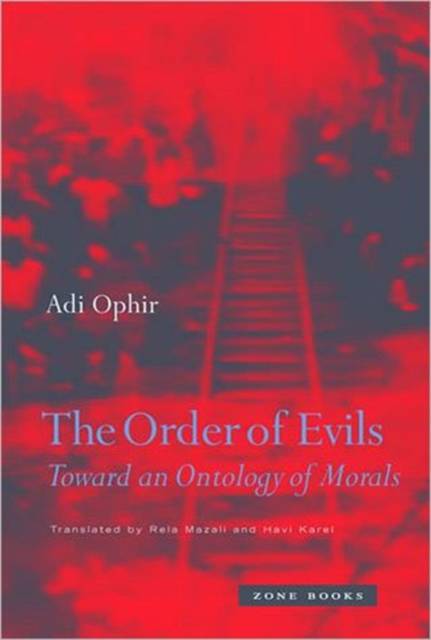
What remains of moral judgment when truth itself is mistrusted, when the validity of every belief system depends on its context, when power and knowledge are inextricably entangled? Is a viable moral theory still possible in the wake of the postmodern criticism of modern philosophy? The Order of Evils responds directly to these questions and dilemmas with one simple and brilliant change of focus.
Rather than concentrating on the age-old themes of justice and freedom, Adi Ophir offers a moral theory that foregrounds the existential and political nature of Evil. Ophir's main contention is that evil is neither a diabolical element residing in the hearts of men nor a meaningless absence of the good. Rather, it is the socially structured order of "superfluous evils." Evils, like pain, suffering, loss, and humiliation, are superfluous when they could have -- but have not -- been prevented. Through close analysis of seminal works by modern and postmodern philosophers -- from Rousseau, Kant, Marx, Sartre, and Arendt to Foucault, Lévinas, Derrida, and Lyotard -- Ophir forges a new perspective for thinking about what it means to be a moral being; to be moral, he argues, is to care for others and to be committed to preventing, at all costs, their suffering and distress. A theoretically sophisticated work, The Order of Evils also bears the traces of Ophir's own political and personal experiences as an Israeli philosopher and activist. Two major events in recent Jewish history have profoundly influenced his thinking: the Holocaust and the prolonged Israeli domination of Palestinians in the occupied territories, both of which are interpreted within the author's moral framework as systematic productions of evils. Ophir does not compare the two events. Instead, he introduces a typology of disasters that allows them to be located within the wide spectrum of human-generated calamities whose specificity and general patterns emerge clearly and distinctly as what they are and are not.Spécifications
Parties prenantes
- Auteur(s) :
- Traducteur(s):
- Editeur:
Contenu
- Nombre de pages :
- 704
- Langue:
- Anglais
- Collection :
Caractéristiques
- EAN:
- 9781890951511
- Date de parution :
- 08-10-05
- Format:
- Livre relié
- Format numérique:
- Genaaid
- Dimensions :
- 155 mm x 231 mm
- Poids :
- 1088 g



Seulement chez Librairie Club
+ 159 points sur votre carte client de Librairie Club
Cadeau


Les avis
Nous publions uniquement les avis qui respectent les conditions requises. Consultez nos conditions pour les avis.