


En raison d'une grève chez bpost, des retards de livraison peuvent survenir. Besoin de quelque chose en urgence ? Optez pour un retrait en magasin ou rendez-vous dans une Librairie Club à proximité.
- Retrait en 2 heures
- Assortiment impressionnant
- Paiement sécurisé
- Toujours un magasin près de chez vous
En raison d'une grève chez bpost, des retards de livraison peuvent survenir. Besoin de quelque chose en urgence ? Optez pour un retrait en magasin ou rendez-vous dans une Librairie Club à proximité.
- Retrait en 2 heures
- Assortiment impressionnant
- Paiement sécurisé
- Toujours un magasin près de chez vous



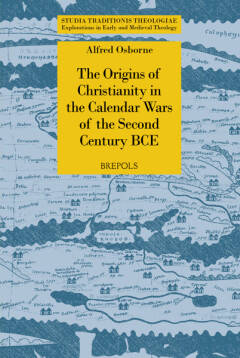
The Origins of Christianity in the Calendar Wars of the Second Century Bce
Alfred Osborne
79,50 €
+ 159 points
Description
In the Gospels Jesus is called a 'Nazarene' or 'Nazoraean'. Does this mean he came from Nazareth? Basing himself on Lidzbarski's analysis of the Hebrew/Aramaic origins of the Greek terms Nazarenos and Nazoraios Dr Osborne proposes that these epithets indicate that Jesus was a nosri, a '(Strict) Keeper/Guardian (of the Law)'. This meant he was a follower of the 364-day liturgical calendar known to us from 1 Enoch, Jubilees, and Qumran. An examination of the passages where these terms appear shows that this hypothesis leads to a deeper understanding of the circumstances in which the first Christian communities arose and clarifies greatly the background of Jesus' crucifixion as Yesu ha-Nosri. The book then traces the influence of the nosrim on the history of Israel from their origin in the 'calendar wars' that tore apart the Jewish nation from 172-163 BCE. These broke out after the lunisolar calendar was introduced into the temple liturgy by Menelaus the high priest, and only came to an end when the 364-day calendar was reintroduced under his successor, Alcimus. In 151 BCE, however, Jonathan Maccabaeus was appointed high priest and reintroduced the lunisolar calendar. The nosrim were suppressed and forced to emigrate or go underground. They reappear as leaders of Jewish resistance to Roman occupation after Pompey incorporated Judaea into the empire in 63 BCE. Eventually they became the chief instigators of the revolt against Rome that led to the destruction of Jerusalem in 70 CE. Osborne argues that the no?rim thought to have been included in the Twelfth Benediction of the Amidah at Yavneh around 90 CE are these same '(Strict) Keepers/Guardians (of the Law)'.
Spécifications
Parties prenantes
- Auteur(s) :
- Editeur:
Contenu
- Nombre de pages :
- 325
- Langue:
- Anglais
- Collection :
- Tome:
- n° 60
Caractéristiques
- EAN:
- 9782503613062
- Date de parution :
- 13-02-25
- Format:
- Livre broché
- Format numérique:
- Trade paperback (VS)
- Poids :
- 331 g


Seulement chez Librairie Club
+ 159 points sur votre carte client de Librairie Club
Cadeau


Les avis
Nous publions uniquement les avis qui respectent les conditions requises. Consultez nos conditions pour les avis.