•  Retrait en 2 heures
  •  Assortiment impressionnant
  •  Paiement sécurisé
  •  Toujours un magasin près de chez vous

  •  Retrait gratuit dans votre magasin Club
  •  7.000.0000 titres dans notre catalogue
  •  Payer en toute sécurité
  •  Toujours un magasin près de chez vous

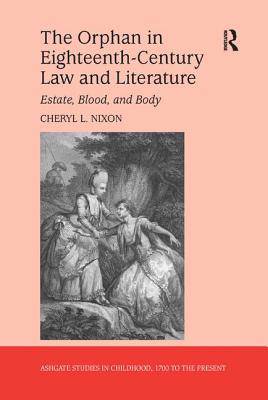
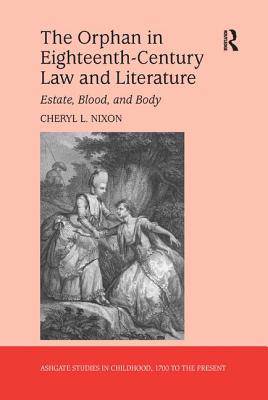
The Orphan in Eighteenth-Century Law and Literature

Estate, Blood, and Body

Cheryl L Nixon
Livre broché | Anglais | Studies in Childhood, 1700 to the Present
106,95 €
+ 213 points
Format
Livraison 2 à 3 semaines
Passer une commande en un clic
Payer en toute sécurité
Livraison en Belgique: 3,99 €
Livraison en magasin gratuite

Description

Cheryl Nixon's book is the first to connect the eighteenth-century fictional orphan and factual orphan, emphasizing the legal concepts of estate, blood, and body. Examining novels by authors such as Eliza Haywood, Tobias Smollett, and Elizabeth Inchbald, and referencing never-before analyzed case records, Nixon reconstructs the narratives of real orphans in the British parliamentary, equity, and common law courts and compares them to the narratives of fictional orphans. The orphan's uncertain economic, familial, and bodily status creates opportunities to "plot" his or her future according to new ideologies of the social individual. Nixon demonstrates that the orphan encourages both fact and fiction to re-imagine structures of estate (property and inheritance), blood (familial origins and marriage), and body (gender and class mobility). Whereas studies of the orphan typically emphasize the poor urban foundling, Nixon focuses on the orphaned heir or heiress and his or her need to be situated in a domestic space. Arguing that the eighteenth century constructs the "valued" orphan, Nixon shows how the wealthy orphan became associated with new understandings of the individual. New archival research encompassing print and manuscript records from Parliament, Chancery, Exchequer, and King's Bench demonstrate the law's interest in the propertied orphan. The novel uses this figure to question the formulaic structures of narrative sub-genres such as the picaresque and romance and ultimately encourage the hybridization of such plots. As Nixon traces the orphan's contribution to the developing novel and developing ideology of the individual, she shows how the orphan creates factual and fictional understandings of class, family, and gender.

Spécifications

Parties prenantes

Auteur(s) :
Editeur:

Contenu

Nombre de pages :
304
Langue:
Anglais
Collection :

Caractéristiques

EAN:
9781138261846
Date de parution :
15-11-16
Format:
Livre broché
Format numérique:
Trade paperback (VS)
Dimensions :
156 mm x 234 mm
Poids :
426 g
Librairie Club

Seulement chez Librairie Club

+ 213 points sur votre carte client de Librairie Club
Standaard Boekhandel

Les avis

Nous publions uniquement les avis qui respectent les conditions requises. Consultez nos conditions pour les avis.