


- Retrait en 2 heures
- Assortiment impressionnant
- Paiement sécurisé
- Toujours un magasin près de chez vous
- Retrait gratuit dans votre magasin Club
- 7.000.0000 titres dans notre catalogue
- Payer en toute sécurité
- Toujours un magasin près de chez vous



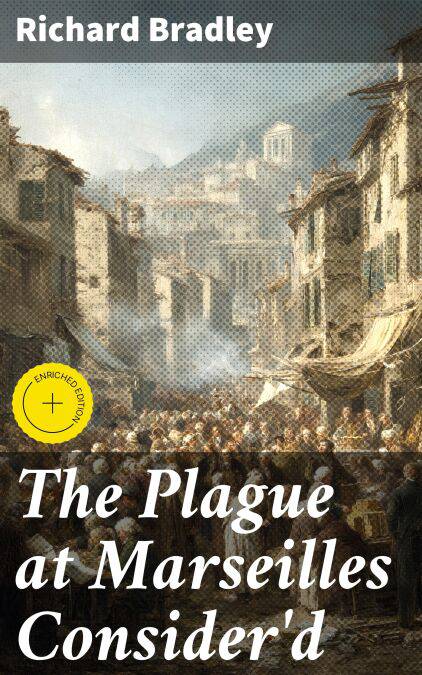
The Plague at Marseilles Consider'd EBOOK
Enriched edition. With Remarks Upon the Plague in General, Shewing Its Cause and Nature of Infection, with Necessary Precautions to Prevent the Speading of That Direful Distemper
Richard Bradley
Ebook | Anglais
1,99 €
+ 1 points
Description
In "The Plague at Marseilles Consider'd," Richard Bradley meticulously examines the devastating epidemic that struck Marseille in the 18th century, weaving together historical accounts, medical observations, and societal reactions to the crisis. Bradley's narrative style is both analytical and imaginative, employing a rich, descriptive language that evokes the dread and turmoil experienced by the city's inhabitants. Contextually, this work emerges during the Enlightenment, a period steeped in the pursuit of knowledge and reason, yet still grappling with the omnipresent specter of disease, making Bradley's exploration of plague both timely and resonant with the contemporary debates on health and morality. Richard Bradley, a noted botanist and natural philosopher, was deeply influenced by the intersection of science and the human condition. His background in the empirical study of nature and keen observations of social dynamics informed his nuanced view of how epidemics not only ravage populations but also challenge the resilience and ethics of society. This cultivated perspective allowed him to craft a narrative that is as much a reflection on human behavior as it is a study of a public health crisis. For readers interested in public health, history, or the complexities of human response to calamity, "The Plague at Marseilles Consider'd" is an essential text that not only offers a vivid recounting of a specific event but also provides timeless insights into the human experience when faced with catastrophe. Bradley's work remains a significant contribution to both historical literature and contemporary discussions on health crises.
In this enriched edition, we have carefully created added value for your reading experience:
- A succinct Introduction situates the work's timeless appeal and themes.
- The Synopsis outlines the central plot, highlighting key developments without spoiling critical twists.
- A detailed Historical Context immerses you in the era's events and influences that shaped the writing.
- A thorough Analysis dissects symbols, motifs, and character arcs to unearth underlying meanings.
- Reflection questions prompt you to engage personally with the work's messages, connecting them to modern life.
- Hand‐picked Memorable Quotes shine a spotlight on moments of literary brilliance.
- Interactive footnotes clarify unusual references, historical allusions, and archaic phrases for an effortless, more informed read.
In this enriched edition, we have carefully created added value for your reading experience:
- A succinct Introduction situates the work's timeless appeal and themes.
- The Synopsis outlines the central plot, highlighting key developments without spoiling critical twists.
- A detailed Historical Context immerses you in the era's events and influences that shaped the writing.
- A thorough Analysis dissects symbols, motifs, and character arcs to unearth underlying meanings.
- Reflection questions prompt you to engage personally with the work's messages, connecting them to modern life.
- Hand‐picked Memorable Quotes shine a spotlight on moments of literary brilliance.
- Interactive footnotes clarify unusual references, historical allusions, and archaic phrases for an effortless, more informed read.
Spécifications
Parties prenantes
- Auteur(s) :
- Editeur:
Contenu
- Nombre de pages :
- 317
- Langue:
- Anglais
Caractéristiques
- EAN:
- 4057664580955
- Date de parution :
- 02-12-19
- Format:
- Ebook
- Protection digitale:
- Digital watermarking
- Format numérique:
- ePub



Seulement chez Librairie Club
+ 1 points sur votre carte client de Librairie Club
Cadeau

Cadeau


Les avis
Nous publions uniquement les avis qui respectent les conditions requises. Consultez nos conditions pour les avis.