


En raison d'une grève chez bpost, des retards de livraison peuvent survenir. Besoin de quelque chose en urgence ? Optez pour un retrait en magasin ou rendez-vous dans une Librairie Club à proximité.
- Retrait en 2 heures
- Assortiment impressionnant
- Paiement sécurisé
- Toujours un magasin près de chez vous
En raison d'une grève chez bpost, des retards de livraison peuvent survenir. Besoin de quelque chose en urgence ? Optez pour un retrait en magasin ou rendez-vous dans une Librairie Club à proximité.
- Retrait en 2 heures
- Assortiment impressionnant
- Paiement sécurisé
- Toujours un magasin près de chez vous



6,49 €
+ 6 points
Description
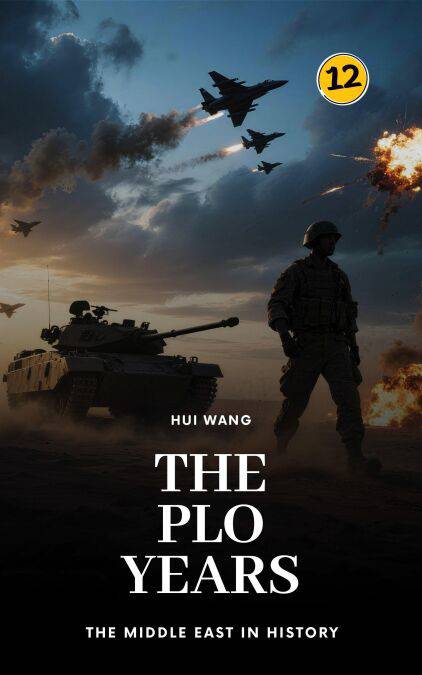
The PLO Years: The Middle East in History, is my attempt to tell the story behind the headlines — the people, the decisions, and the accidents that shaped the modern Middle East. It opens with the Battle of Karameh — the April 1968 clash that transformed Yasser Arafat into a regional symbol — and then follows the emergence of Fatah, tracing how a dispersed, underground network gradually hardened into a national force. This is not a legend spun from slogans; it's a careful look at how leadership is forged under pressure.
From royal courts to refugee camps, the narrative follows Arafat's uneasy, often fraught relationship with King Hussein of Jordan, a relationship that exploded into the 1970 confrontation known as Black September. Lebanon appears not as a footnote but as a decisive turning point: the 1969 Cairo Agreement, the rise of a "state within a state" in the camps, and the brittle, factional politics of Beirut together show how Lebanon was reshaped into a battleground that would draw in Syria, Israel, and the PLO.
War takes center stage as Israel's Six-Day War redraws the map and sets off waves that still haven't settled. I trace the rise of figures like Yitzhak Shamir — a man who moved from underground fighter to prime minister — and follow how military logic bled into political life. From Operation Wooden Leg — the 1 October 1985 airstrike on PLO headquarters in Tunis — to Israel's 1982 invasion of Lebanon (Operation Peace for Galilee), these chapters show how violence crossed borders and steadily narrowed the range of possible choices.
The book also follows the role of the United States, where Washington's shifting priorities pulled Israel and the PLO onto different trajectories. From the Reagan Plan to the outbreak of the First Intifada in 1987, diplomacy and street‑level rebellion collided, producing outcomes no one had fully anticipated. Yitzhak Rabin appears here as a complex figure — a soldier turned statesman, confronting a reality that could no longer be controlled by force alone.
The final chapters track Arafat through his most perilous political gamble during the Gulf War — a moment that deepened his isolation and reshaped his options — and then into the quiet, secret channels that nudged him from international pariah toward the negotiating table in Oslo. Along the way, figures such as Yitzhak Rabin, Yitzhak Shamir, and Shimon Peres emerge not as abstractions or icons, but as flawed, driven men molded by fear, ambition, and the blunt timing of history.
Spécifications
Parties prenantes
- Auteur(s) :
- Editeur:
Contenu
- Langue:
- Anglais
- Collection :
Caractéristiques
- EAN:
- 9789190115961
- Date de parution :
- 13-01-26
- Format:
- Ebook
- Protection digitale:
- /
- Format numérique:
- ePub



Seulement chez Librairie Club
+ 6 points sur votre carte client de Librairie Club
Cadeau

Cadeau


Les avis
Nous publions uniquement les avis qui respectent les conditions requises. Consultez nos conditions pour les avis.