


- Retrait en 2 heures
- Assortiment impressionnant
- Paiement sécurisé
- Toujours un magasin près de chez vous
- Retrait en 2 heures
- Assortiment impressionnant
- Paiement sécurisé
- Toujours un magasin près de chez vous



1,99 €
+ 1 points
Description
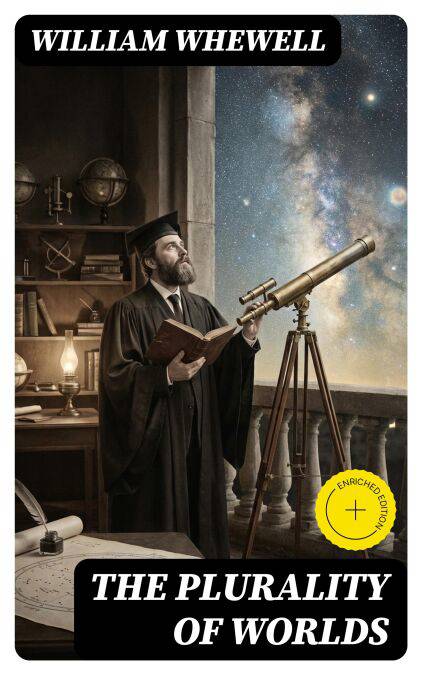
In "The Plurality of Worlds," William Whewell explores the profound implications of the Copernican revolution and the scientific advancements of the 19th century in shaping humanity's understanding of the cosmos. Whewell employs a philosophical and speculative literary style, skillfully intertwining scientific reasoning with metaphysical inquiry. The text invites readers to ponder the possibility of extraterrestrial life while integrating rich historical context, reflecting the Enlightenment's preoccupation with empiricism and reason. Through a series of interconnected essays, Whewell elucidates the moral and theological ramifications of a universe populated by many worlds. William Whewell, a polymath and a prominent figure in the scientific community of his time, made significant contributions to various fields, including philosophy, science, and education. His extensive engagement with geology, astronomy, and the history of science fueled his intellectual curiosity towards the plurality of worlds. Whewell's background as a historian of science equipped him with the analytical tools necessary to negotiate the metaphysical questions that arose from scientific discoveries, culminating in this impactful treatise. This book is highly recommended for readers interested in the intersection of science and philosophy. Whewell's inquiries extend beyond mere speculation, challenging our understanding of life and existence in the cosmos. "The Plurality of Worlds" will captivate those eager to engage with profound questions about humanity's place in an infinitely complex universe.
In this enriched edition, we have carefully created added value for your reading experience:
- A succinct Introduction situates the work's timeless appeal and themes.
- The Synopsis outlines the central plot, highlighting key developments without spoiling critical twists.
- A detailed Historical Context immerses you in the era's events and influences that shaped the writing.
- A thorough Analysis dissects symbols, motifs, and character arcs to unearth underlying meanings.
- Reflection questions prompt you to engage personally with the work's messages, connecting them to modern life.
- Hand‐picked Memorable Quotes shine a spotlight on moments of literary brilliance.
- Interactive footnotes clarify unusual references, historical allusions, and archaic phrases for an effortless, more informed read.
In this enriched edition, we have carefully created added value for your reading experience:
- A succinct Introduction situates the work's timeless appeal and themes.
- The Synopsis outlines the central plot, highlighting key developments without spoiling critical twists.
- A detailed Historical Context immerses you in the era's events and influences that shaped the writing.
- A thorough Analysis dissects symbols, motifs, and character arcs to unearth underlying meanings.
- Reflection questions prompt you to engage personally with the work's messages, connecting them to modern life.
- Hand‐picked Memorable Quotes shine a spotlight on moments of literary brilliance.
- Interactive footnotes clarify unusual references, historical allusions, and archaic phrases for an effortless, more informed read.
Spécifications
Parties prenantes
- Auteur(s) :
- Editeur:
Contenu
- Nombre de pages :
- 242
- Langue:
- Anglais
Caractéristiques
- EAN:
- 8596547309826
- Date de parution :
- 14-09-22
- Format:
- Ebook
- Protection digitale:
- Digital watermarking
- Format numérique:
- ePub



Seulement chez Librairie Club
+ 1 points sur votre carte client de Librairie Club
Cadeau


Les avis
Nous publions uniquement les avis qui respectent les conditions requises. Consultez nos conditions pour les avis.