


- Retrait en 2 heures
- Assortiment impressionnant
- Paiement sécurisé
- Toujours un magasin près de chez vous
- Retrait gratuit dans votre magasin Club
- 7.000.0000 titres dans notre catalogue
- Payer en toute sécurité
- Toujours un magasin près de chez vous



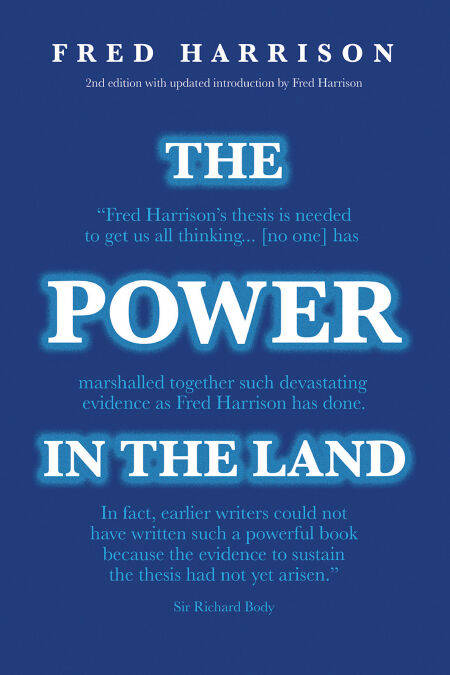
Description
This book is as relevant today as it was when it was published in 1983: we are faced with another global depression, which as it deepens, intensifies the pressure on governments and puts policy-makers in a dilemma. Every prescription has its negative: monetarism - unemployment; Keynesianism - inflation; and the planned economy - authoritarianism. This dilemma, the author argues, stems from a distortion in our understanding of how the industrial economy works, a distortion he traces back to Adam Smith. Adam Smith provided the captains of industry with a theoretical framework and moral justification for the new mode of production which sprang from the Industrial Revolution. He believed he was setting out the rules for a free market system but, inconsistently, he granted landowners an exemption enabling them to exert a monopoly influence on the market which remains to this day. The Marxist critique blames the capitalist for the ills of the system, yet Marx himself acknowledged that the power of the owners of capital rested on the power inherent in land. Both Marx and Smith recognized the special role of landowners who, in the words of J.S.Mill, "grow richer in their sleep without working, risking or economizing", but neither pursued the macro-economic implications and, if anything, covered them up. The author looks at the implications: the conflict between labour and capital is a false one that obstructs a rational strategy for rescuing the Western economy; the origins of the collapse of the 1980s are to be found in land speculation; this exploitation of the unique power, intrinsic to land, gives rise to inner city decay, urban sprawl, misallocation of resources, mass unemployment and the meteoric rise of property values. The major industrial nations entered the 1990s in the midst of land booms offering riches for a few but unemployment for many: banks in Texas were bankrupted by massive speculation in real estate and even embassies had to abandon their offices because they could not afford the rents in Tokyo. In Britain, the spoils from housing - the direct result of the way the land market operates - have enriched owner-occupiers but crippled the flow of workers into regions where entrepreneurs wanted to invest and lead the economy back to full employment. Thus, it is the author's thesis that land speculation is the major cause of depressions. He shows how the land market functions to distort the relations between labour and capital and how land speculation periodically chokes off economic expansion, causing stagnation. The remedy proposed by the author is a fiscal one which would remove the disruptive factor of land speculation and transfer the burden of taxes from labour and capital to economic rent, a publicly created revenue. This would create employment and higher growth rates, while avoiding the inflation-risk policy of deficit financing; increased consumption and investment would be generated by the private sector, not government.
Spécifications
Parties prenantes
- Auteur(s) :
- Editeur:
Contenu
- Nombre de pages :
- 328
- Langue:
- Anglais
Caractéristiques
- EAN:
- 9780856835438
- Date de parution :
- 14-04-21
- Format:
- Ebook
- Protection digitale:
- Digital watermarking
- Format numérique:
- ePub


Seulement chez Librairie Club
+ 14 points sur votre carte client de Librairie Club
Cadeau

Cadeau


Les avis
Nous publions uniquement les avis qui respectent les conditions requises. Consultez nos conditions pour les avis.