


En raison d'une grève chez bpost, des retards de livraison peuvent survenir. Besoin de quelque chose en urgence ? Optez pour un retrait en magasin ou rendez-vous dans une Librairie Club à proximité.
- Retrait en 2 heures
- Assortiment impressionnant
- Paiement sécurisé
- Toujours un magasin près de chez vous
En raison d'une grève chez bpost, des retards de livraison peuvent survenir. Besoin de quelque chose en urgence ? Optez pour un retrait en magasin ou rendez-vous dans une Librairie Club à proximité.
- Retrait en 2 heures
- Assortiment impressionnant
- Paiement sécurisé
- Toujours un magasin près de chez vous



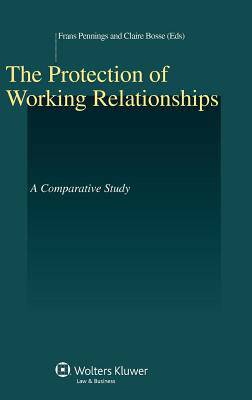
The Protection of Working Relationships. a Comparative Study
A Comparative Study
Bosse
Livre relié | Anglais
138,45 €
+ 276 points
Description
In recent years it has become clear that many businesses, motivated by avoiding the rigidity and the price tag associated with labour law and social security, have succeeded in eroding the protection of labour law by creating numerous categories of workers classified as non-employees. In 1996 the International Labour Organisation (ILO) adopted Recommendation 198, which asks its Members to undertake action to reduce 'disguised' employment relationships, with the goal of ensuring that those actually working in an employment relationship are actually given the corresponding legal status. Though these are - from a legal approach - two conceptually different phenomena, they are closely related from a social policy point of view. In order to make a substantial contribution to the discussion on these developments a group of noted European labour law scholars has undertaken the research assembled in this book, recommending labour law reforms based on a close examination of existing conditions. The eight authors analyse measures and legal instruments offered by the European Union and the ILO to cover persons performing personal work, as well as specific developments in Belgium, France, The Netherlands, Poland, Germany, and the United Kingdom. In each case they describe viable ways in which categories of persons not treated as employees can be brought under the protection of labour law and how the distinction between employees and self-employed can become more clear. In a concluding final Chapter comparative conclusions are drawn on the basis of this study and recommendations are given to the EU, the ILO and the individual Member States. Among the specific issues covered are the following: - redefining the subordination criterion; - the role of the courts; - determination of the contract of employment; - forms of labour involving more than two contracting parties (e.g., employment agency arrangements); - the legal position of temporary workers; - 'employee-like' persons, e.g., home-workers or commercial representatives; - the 'bogus' self-employed; - introduction and effect of legal presumptions in labour law and/or social security; - developing uniform criteria for the employment relationship; - criteria for identifying self-employed but economically-dependent workers; - extension of protection of labour law to persons other than employees or the self-employed; and - social rights applicable to all work contracts irrespective of their formal qualification; - floor of core rights. This study seriously contributes toward overcoming the reluctant and piecemeal measures commonly taken to extend the protection of the employment contract. Although the authors acknowledge the continuing tension between labour law protection and the need for a flexible workforce, they also recognize the positive effects of best practices that lead to more certainty, fewer disputes, and clear (but still flexible if necessary) agreements. The book will be warmly welcomed as a signal contribution to addressing what one labour law scholar has called 'the most important industrial relations issue of our time.'
Spécifications
Parties prenantes
- Auteur(s) :
- Editeur:
Contenu
- Nombre de pages :
- 240
- Langue:
- Anglais
Caractéristiques
- EAN:
- 9789041132895
- Date de parution :
- 01-03-11
- Format:
- Livre relié
- Format numérique:
- Genaaid
- Dimensions :
- 156 mm x 234 mm
- Poids :
- 512 g


Seulement chez Librairie Club
+ 276 points sur votre carte client de Librairie Club
Cadeau


Les avis
Nous publions uniquement les avis qui respectent les conditions requises. Consultez nos conditions pour les avis.