


- Retrait en 2 heures
- Assortiment impressionnant
- Paiement sécurisé
- Toujours un magasin près de chez vous
- Retrait en 2 heures
- Assortiment impressionnant
- Paiement sécurisé
- Toujours un magasin près de chez vous



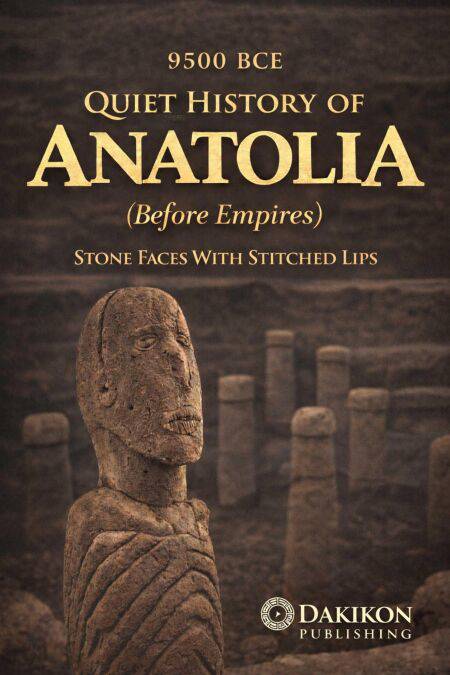
The Quiet History of Anatolia (Before Empires) Stone Faces With Stitched Lips EBOOK
The Quiet History, #1
Dakikon Publishing
4,49 €
+ 4 points
Description
Eleven thousand years ago, on a limestone plateau in southeastern Türkiye, communities of hunter-gatherers raised monumental stone pillars, carved animal scenes into rock, buried their buildings alive, and kept the skulls of their dead in the walls of their houses.
They had no writing. No pottery. No agriculture. No named gods.
They had stone. And stone was enough.
The Quiet History of Anatolia (Before Empires) explores the Taş Tepeler network, a constellation of Pre-Pottery Neolithic sites including Göbekli Tepe, Karahan Tepe, and Sayburç, where the earliest known monumental architecture, narrative art, and organized ritual emerged thousands of years before the first cities of Mesopotamia.
This is not a book of dramatic claims. It is a slow, grounded walk through the material evidence of a world that settled before history began to record itself. Carved pillars that may represent ancestors. Statues with visible ribs and stitched lips. Fingerprints preserved in clay for a hundred centuries. Buildings that were constructed, used for generations, and then deliberately filled and sealed, as though architecture itself could die.
Drawing on the latest archaeological research from the Taş Tepeler Project, this book asks what these communities believed, how they organized, and why they built on a scale that was supposed to require farming, cities, and kings.
They did it without any of those things.
The land buried their work.
The land kept it.
And now, slowly, the stone is speaking again.
Spécifications
Parties prenantes
- Auteur(s) :
- Editeur:
Contenu
- Langue:
- Anglais
- Collection :
Caractéristiques
- EAN:
- 9798224971916
- Date de parution :
- 10-02-2026
- Format:
- Ebook
- Protection digitale:
- /
- Format numérique:
- ePub


Seulement chez Librairie Club
+ 4 points sur votre carte client de Librairie Club
Cadeau


Les avis
Nous publions uniquement les avis qui respectent les conditions requises. Consultez nos conditions pour les avis.