


- Retrait en 2 heures
- Assortiment impressionnant
- Paiement sécurisé
- Toujours un magasin près de chez vous
- Retrait en 2 heures
- Assortiment impressionnant
- Paiement sécurisé
- Toujours un magasin près de chez vous



Description
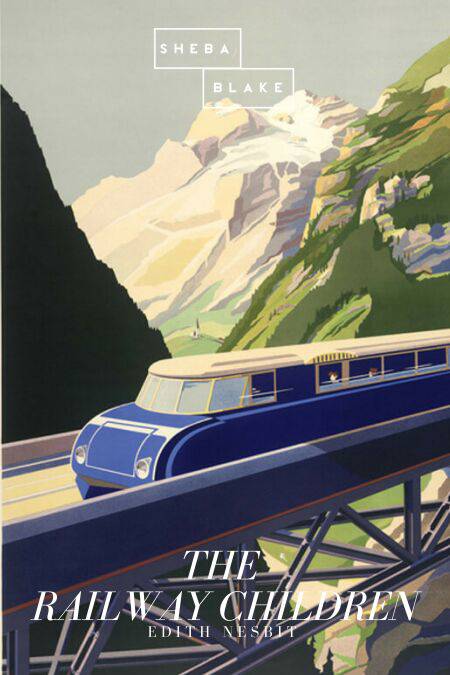
The Railway Children is a children's book by Edith Nesbit, originally serialised in The London Magazine during 1905 and first published in book form in 1906. It has been adapted for the screen several times, of which the 1970 film version is the best known. The Oxford Dictionary of National Biography credits Oswald Barron, who had a deep affection for Nesbit, with having provided the plot. The setting is thought to be inspired by Edith's walks to Chelsfield railway station close to where she lived, and her observance of the construction of the railway cutting and tunnel between Chelsfield and Knockholt. The story concerns a family who move from London to "The Three Chimneys", a house near the railway in Yorkshire, after the father, who works at the Foreign Office, is imprisoned after being falsely accused of spying. The children befriend an Old Gentleman who regularly takes the 9:15 train near their home; he is eventually able to help prove their father's innocence, and the family is reunited. The family takes care of a Russian exile, Mr Szczepansky, who came to England looking for his family (later located) and Jim, the grandson of the Old Gentleman, who suffers a broken leg in a tunnel. The theme of an innocent man being falsely imprisoned for espionage and finally vindicated might have been influenced by the Dreyfus Affair, which was a prominent worldwide news item a few years before the book was written. The Russian exile, persecuted by the Tsars for writing "a beautiful book about poor people and how to help them" and subsequently helped by the children, was most likely an amalgam of the real-life dissidents Sergius Stepniak and Peter Kropotkin who were both friends of the author.
Spécifications
Parties prenantes
- Auteur(s) :
- Editeur:
Contenu
- Nombre de pages :
- 153
- Langue:
- Anglais
Caractéristiques
- EAN:
- 9783961898640
- Date de parution :
- 18-05-17
- Format:
- Ebook
- Protection digitale:
- Digital watermarking
- Format numérique:
- ePub



Seulement chez Librairie Club
+ 3 points sur votre carte client de Librairie Club
Cadeau


Les avis
Nous publions uniquement les avis qui respectent les conditions requises. Consultez nos conditions pour les avis.