


- Retrait en 2 heures
- Assortiment impressionnant
- Paiement sécurisé
- Toujours un magasin près de chez vous
- Retrait en 2 heures
- Assortiment impressionnant
- Paiement sécurisé
- Toujours un magasin près de chez vous



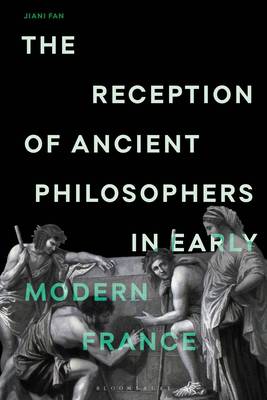
The Reception of Ancient Philosophers in Early Modern France
Jiani Fan
129,95 €
+ 259 points
Description
Offering a ground-breaking examination of how major French thinkers of the sixteenth-eighteenth centuries addressed the profound intellectual and spiritual crises of their age, this book moves beyond traditional intellectual history to argue that early modern French literature did not merely transmit ancient ideas but actively engaged in a critical dialogue with them.
At its core, the book consists of focused case studies on the appropriation of ancient philosophical schools as a way of life, including Socratic, Platonic, Stoic, Epicurean, Cynic, and Skeptic traditions, in Early Modern French literature. Jiani Fan argues that these French authors used parody, irony, and literary innovation as tools to dismantle classical systems and, in many cases, to clear a path for new Christian, skeptical, or scientific worldviews. We are guided through Michel de Montaigne's evolution from an Epicurean interest in Lucretian clinamen as a model for free will toward a fideist skepticism that rejects philosophical inquiry in favor of divine revelation. Fan then analyzes how the moralists La Rochefoucauld and Pascal deconstructed the classical ideal of douceur (sweetness), exposing it not as a marker of Ciceronian humanitas but as a subtle instrument of the Augustinian libido dominandi, a tyrannical flattery that enslaves through pleasure rather than reason. Another central chapter investigates Pascal's ingenious portrayal of Plato and Aristotle as honnêtes hommes, courtly figures who employ Socratic irony and Pyrrhonian doubt not in a pure search for truth but as a political strategy to manage the vanity of princes. At its conclusion, this book explores the Enlightenment's culmination of this critical tradition in Diderot's Rameau's Nephew, where the ancient Cynic practice of parrhêsia (frank speech) degenerates into a modern, cynical performance, an "enlightened false consciousness" that reflects the disillusionment of a failed ideal.Spécifications
Parties prenantes
- Auteur(s) :
- Editeur:
Contenu
- Nombre de pages :
- 224
- Langue:
- Anglais
- Collection :
Caractéristiques
- EAN:
- 9781350630895
- Date de parution :
- 29-10-26
- Format:
- Livre relié
- Format numérique:
- Genaaid
- Dimensions :
- 156 mm x 234 mm
- Poids :
- 453 g


Seulement chez Librairie Club
+ 259 points sur votre carte client de Librairie Club
Cadeau


Les avis
Nous publions uniquement les avis qui respectent les conditions requises. Consultez nos conditions pour les avis.