


- Retrait en 2 heures
- Assortiment impressionnant
- Paiement sécurisé
- Toujours un magasin près de chez vous
- Retrait en 2 heures
- Assortiment impressionnant
- Paiement sécurisé
- Toujours un magasin près de chez vous



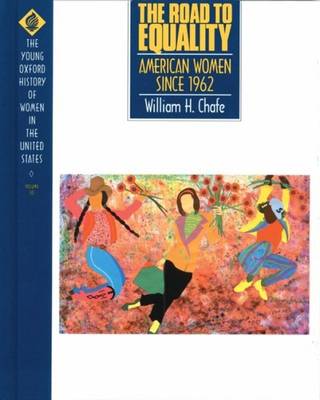
Description
The 1960s, 1970s, and 1980s were decades of vast changes in the world at large--new nations emerged, technology advanced at a record pace, and global and environmental awareness intensified. Perhaps no change was more obvious than the shifting roles of women in the family, society, the economy, and in politics. More changes occurred in these three decades than in the preceding 300 years--yet fundamental problems of gender inequality remained.
The women's movement that grew in the 1960s transformed ways of thinking about men's and women's destinies. Stimulated by the a climate of confrontation and activism, American women organized to challenge prejudices about female capabilities and stereotypes about women's "place." In areas as diverse as work, sexuality, emotion, and politics women sought to claim rights as individuals, and to upset the hierarchy of power between the sexes.
But the revolution in women's status affected women in dramatically different ways, depending on whether they were white or nonwhite, rich or poor, married or divorced. Too often the benefits that were won protected only white, middle-class women. Actions that might have brought advancement for women of all classes and races, such as creating affordable child care, were often not addressed. Other women did not welcome "liberation" at all, but saw it as an attack on the very foundation of society and the tradition of the family. Ethnicity, class, and philosophical belief remained powerful obstacles to universal sisterhood.
Gloria Steinem, Betty Friedan, Phyllis Schlafly, Roe v. Wade, the Equal Rights Amendment (ERA), the National Organization of Women (NOW), and the Moral Majority were among the major influences during these turbulent decades. They represent women from varied walks of life, economic conditions, races, and religions who found themselves questioning and challenging each other as often as they did traditional society. The journey along The Road to Equality is not yet over. many barriers of gender and race have yet to be overcome. But even so, it is fair to say that this was an era of liberation.
The women's movement that grew in the 1960s transformed ways of thinking about men's and women's destinies. Stimulated by the a climate of confrontation and activism, American women organized to challenge prejudices about female capabilities and stereotypes about women's "place." In areas as diverse as work, sexuality, emotion, and politics women sought to claim rights as individuals, and to upset the hierarchy of power between the sexes.
But the revolution in women's status affected women in dramatically different ways, depending on whether they were white or nonwhite, rich or poor, married or divorced. Too often the benefits that were won protected only white, middle-class women. Actions that might have brought advancement for women of all classes and races, such as creating affordable child care, were often not addressed. Other women did not welcome "liberation" at all, but saw it as an attack on the very foundation of society and the tradition of the family. Ethnicity, class, and philosophical belief remained powerful obstacles to universal sisterhood.
Gloria Steinem, Betty Friedan, Phyllis Schlafly, Roe v. Wade, the Equal Rights Amendment (ERA), the National Organization of Women (NOW), and the Moral Majority were among the major influences during these turbulent decades. They represent women from varied walks of life, economic conditions, races, and religions who found themselves questioning and challenging each other as often as they did traditional society. The journey along The Road to Equality is not yet over. many barriers of gender and race have yet to be overcome. But even so, it is fair to say that this was an era of liberation.
Spécifications
Parties prenantes
- Auteur(s) :
- Editeur:
Contenu
- Nombre de pages :
- 144
- Langue:
- Anglais
- Collection :
- Tome:
- n° 10
Caractéristiques
- EAN:
- 9780195083255
- Date de parution :
- 22-09-94
- Format:
- Livre relié
- Format numérique:
- Genaaid
- Dimensions :
- 198 mm x 243 mm
- Poids :
- 521 g


Seulement chez Librairie Club
+ 84 points sur votre carte client de Librairie Club
Cadeau


Les avis
Nous publions uniquement les avis qui respectent les conditions requises. Consultez nos conditions pour les avis.