


- Retrait en 2 heures
- Assortiment impressionnant
- Paiement sécurisé
- Toujours un magasin près de chez vous
- Retrait gratuit dans votre magasin Club
- 7.000.0000 titres dans notre catalogue
- Payer en toute sécurité
- Toujours un magasin près de chez vous



26,95 €
+ 53 points
Description
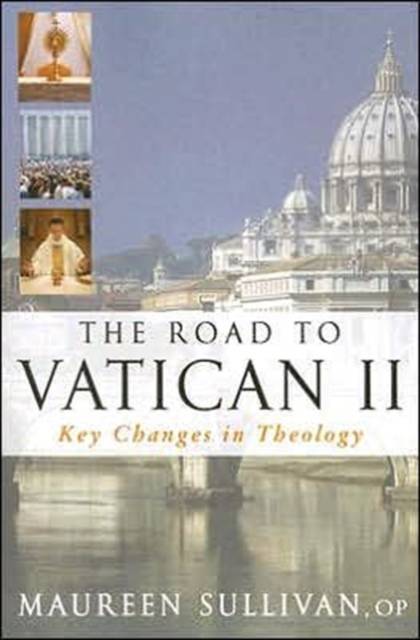
The Second Vatican Council is considered by most theologians to have been a decisive moment in the history of the Catholic Church. It produced a charter for the Church of the twentieth century and beyond and spawned thousands of books, articles, conferences, and doctoral theses over the last forty years. Part of the Council's fascination lies in the many "stories" that surround it. In THE ROAD TO VATICAN II, author Maureen Sullivan tells the story behind the story by revealing how the Church moved from the rigid, hierarchical model espoused by Pius IX at Vatican I (1869-70) to the collegial, "communio" model that emerged under John XXIII at Vatican II (1962-65). She recounts the events and trends leading up to the Council and demonstrates how it became possible, in the four brief sessions that took place from 1962-65, for over 2,500 bishops--who often disagreed on the most critical issues--to produce sixteen documents that touched the very essence of the Catholic faith. THE ROAD TO VATICAN II is written--not for other theologians--but for men and women who are eager to have a more in-depth understanding of a watershed event that shaped their faith. The author focuses on the contributions of important theologians whose efforts over the years laid the groundwork for the Council and she documents their influence on many of the key documents that emerged. Sullivan argues that these theologians were indeed prophets among us, offering a renewed vision of the faith, a methodology to facilitate the theological endeavor, and a language of life rediscovered in the New Testament that could speak to contemporary men and women. These prophets often suffered because of their convictions, but Sullivan maintains that they were instruments of the Holy Spirit in our midst--and their story needed to be told. +
Spécifications
Parties prenantes
- Auteur(s) :
- Editeur:
Contenu
- Nombre de pages :
- 176
- Langue:
- Anglais
Caractéristiques
- EAN:
- 9780809142774
- Date de parution :
- 01-05-07
- Format:
- Livre broché
- Format numérique:
- Trade paperback (VS)
- Dimensions :
- 162 mm x 228 mm
- Poids :
- 285 g


Seulement chez Librairie Club
+ 53 points sur votre carte client de Librairie Club

Les avis
Nous publions uniquement les avis qui respectent les conditions requises. Consultez nos conditions pour les avis.