


- Retrait en 2 heures
- Assortiment impressionnant
- Paiement sécurisé
- Toujours un magasin près de chez vous
- Retrait en 2 heures
- Assortiment impressionnant
- Paiement sécurisé
- Toujours un magasin près de chez vous



1,99 €
+ 1 points
Description
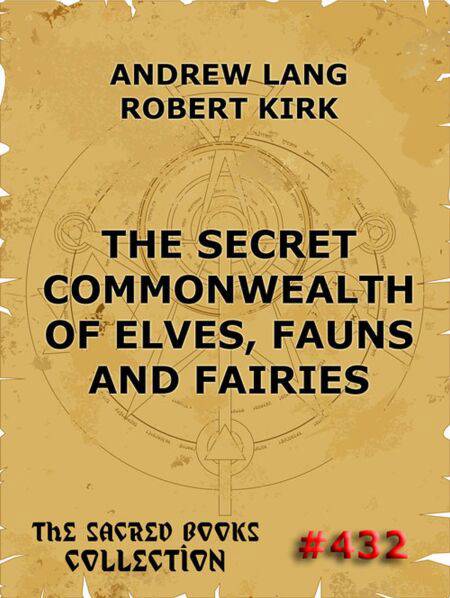
This book is annotated with a rare extensive biographical sketch of the author, Andrew Lang, written by Sir Edmund Gosse, CB, a contemporary poet and writer.
Mr. Kirk's little book was written in 1691 and was probably not printed until 1815, when an edition of only one hundred copies appeared at Edinburgh from the press of James Ballantyne & Company for Longman & Company of London. Mr. Kirk's book is the most curious imaginable. Written in 1691 by a Scotch divine, it is nothing less than a calm assumption of the existence at that time of a commonwealth of elves, fauns, and fairies, whose government, habits, etc., are minutely described upon the authority of "Men of Second Sight" (it is not clear whether the author himself was one of these by virtue of bis being a seventh son), the method of obtaining which gift is also carefully explained. These fairies are of a middle nature between man and angel; they inhabit subterranean abodes, which they change at each quarter of the year. "They are distributed in tribes and orders, and have children, nurses, marriages, deaths, and burials; their apparel and speech is like that of the people and country under which they live; they are said to have aristocratical rulers and laws, but no discernible religion, love, or devotion towards God," their weapons are most what solid earthly bodies, nothing of iron, but much of stone, like to yellow soft flint spa, shaped liked a barbed arrow-head, but flung like a dart, with great force." The moral character of these "subterraneans" is minutely described and the conclusion is, "But for swearing and intemperance, they are not observed so subject to those irregularities, as to envy, spite, hypocrisy, lying, and dissimulation." The author adds to the evidence given by his friends, etc., a letter from Lord Tarbott to the Hon. Robert Boyle, in which many additional instances of second sight are narrated.
Mr. Kirk's little book was written in 1691 and was probably not printed until 1815, when an edition of only one hundred copies appeared at Edinburgh from the press of James Ballantyne & Company for Longman & Company of London. Mr. Kirk's book is the most curious imaginable. Written in 1691 by a Scotch divine, it is nothing less than a calm assumption of the existence at that time of a commonwealth of elves, fauns, and fairies, whose government, habits, etc., are minutely described upon the authority of "Men of Second Sight" (it is not clear whether the author himself was one of these by virtue of bis being a seventh son), the method of obtaining which gift is also carefully explained. These fairies are of a middle nature between man and angel; they inhabit subterranean abodes, which they change at each quarter of the year. "They are distributed in tribes and orders, and have children, nurses, marriages, deaths, and burials; their apparel and speech is like that of the people and country under which they live; they are said to have aristocratical rulers and laws, but no discernible religion, love, or devotion towards God," their weapons are most what solid earthly bodies, nothing of iron, but much of stone, like to yellow soft flint spa, shaped liked a barbed arrow-head, but flung like a dart, with great force." The moral character of these "subterraneans" is minutely described and the conclusion is, "But for swearing and intemperance, they are not observed so subject to those irregularities, as to envy, spite, hypocrisy, lying, and dissimulation." The author adds to the evidence given by his friends, etc., a letter from Lord Tarbott to the Hon. Robert Boyle, in which many additional instances of second sight are narrated.
Spécifications
Parties prenantes
- Auteur(s) :
- Editeur:
Contenu
- Nombre de pages :
- 349
- Langue:
- Anglais
Caractéristiques
- EAN:
- 9783849622596
- Date de parution :
- 20-07-12
- Format:
- Ebook
- Protection digitale:
- Digital watermarking
- Format numérique:
- ePub


Seulement chez Librairie Club
+ 1 points sur votre carte client de Librairie Club
Cadeau


Les avis
Nous publions uniquement les avis qui respectent les conditions requises. Consultez nos conditions pour les avis.