


- Retrait en 2 heures
- Assortiment impressionnant
- Paiement sécurisé
- Toujours un magasin près de chez vous
- Retrait en 2 heures
- Assortiment impressionnant
- Paiement sécurisé
- Toujours un magasin près de chez vous



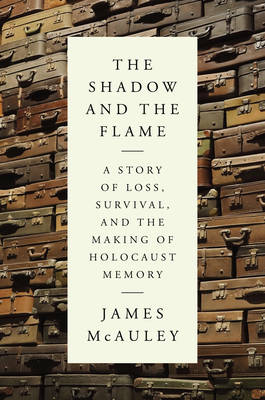
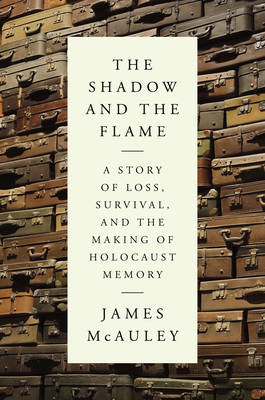
The Shadow and the Flame
A Story of Loss, Survival, and the Making of Holocaust Memory
James McAuley
Livre relié | Anglais
48,95 €
+ 97 points
Format
Description
An urgent history--intimate in its telling, epic in its scope--of an argument that shaped the postwar world: how to define and remember the Holocaust. In 1945, the end of World War II also marked the end of the attempted extermination of the Jewish people. Stunned by grief, survivors faced the task of not only forging new lives but also of shaping how this unprecedented cataclysm, an event that did not yet have a name, might be remembered by generations to come. Over time, what they built was a collective memory whose power and resonance few could have ever imagined in the rubble of the destruction. A magisterial work of history years in the making, The Shadow and the Flame takes as its subject the urgent debate that ensued--one that spanned decades and continents and that was the first of its kind. Acclaimed historian James McAuley takes us into the minds and hearts of the individuals--many well-known, others largely forgotten--who waged that dispute in Europe, the United States, and the newly established state of Israel: from Hannah Arendt, whose reporting from the Eichmann trial enraged her fellow Jews; to Salo Baron, the era's preeminent Jewish historian, who battled to protect the story of his people from the burden of tragedy; to Elie Wiesel, whose account of life at Auschwitz became the one the world chose to embrace, even as it proved controversial among his peers. McAuley transports us from Paris to New York, from the desecrated ghettos of Poland to the fledgling kibbutzim of Israel, as the event that gradually came to be called the Holocaust made an uneasy transition into memory--one that, far from being neatly resolved, weighs all too heavily upon the present. Bold, learned, monumental in its scope and infused with the energy and emotion of its principals, The Shadow and the Flame is the dramatic account of the contentious process--at once painful and shot through with urgency and consequence--of crafting history in real time.
Spécifications
Parties prenantes
- Auteur(s) :
- Editeur:
Contenu
- Nombre de pages :
- 448
- Langue:
- Anglais
Caractéristiques
- EAN:
- 9780593535745
- Date de parution :
- 26-01-27
- Format:
- Livre relié
- Format numérique:
- Genaaid
- Dimensions :
- 156 mm x 235 mm
- Poids :
- 553 g


Seulement chez Librairie Club
+ 97 points sur votre carte client de Librairie Club
Cadeau


Les avis
Nous publions uniquement les avis qui respectent les conditions requises. Consultez nos conditions pour les avis.