


- Retrait en 2 heures
- Assortiment impressionnant
- Paiement sécurisé
- Toujours un magasin près de chez vous
- Retrait gratuit dans votre magasin Club
- 7.000.0000 titres dans notre catalogue
- Payer en toute sécurité
- Toujours un magasin près de chez vous



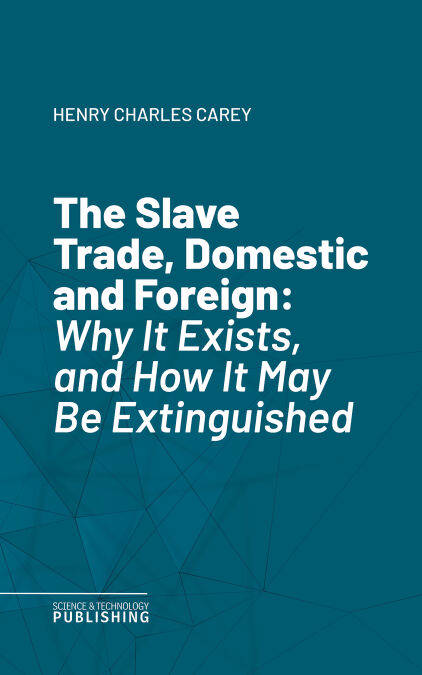
The Slave Trade, Domestic and Foreign EBOOK
Why It Exists, and How It May Be Extinguished
Carey
Ebook | Anglais
19,99 €
+ 19 points
Description
The Slave Trade, Domestic and Foreign: Why It Exists, and How It May Be Extinguished by Henry Charles Carey is a comprehensive economic and social analysis of the institution of slavery, first published in 1853. In this influential work, Carey explores the roots and perpetuation of both domestic and international slave trades, arguing that slavery is not merely a moral or political issue but one deeply intertwined with economic systems and policies. He examines the ways in which free trade, land monopolies, and certain economic structures foster conditions that allow slavery to thrive, both in the United States and abroad. Carey contrasts the economic development of countries that rely on free labor with those that depend on slave labor, highlighting the detrimental effects of the latter on national prosperity, social progress, and human dignity. He delves into the historical context of slavery, tracing its evolution and the various justifications used to maintain it. The book also critiques the policies of European colonial powers and their role in sustaining the transatlantic slave trade. Throughout the text, Carey advocates for economic reforms and policy changes as the most effective means to eradicate slavery. He proposes practical solutions, such as promoting diversified agriculture, supporting small-scale land ownership, and encouraging protective tariffs to nurture domestic industries. By fostering economic independence and opportunity, Carey believes societies can eliminate the conditions that make slavery profitable and necessary. The Slave Trade, Domestic and Foreign is both a passionate condemnation of slavery and a detailed treatise on the economic forces that sustain it. It remains a significant historical document, offering insight into 19th-century debates on slavery, economics, and human rights, and continues to be relevant for those interested in the intersections of economics, policy, and social justice.
Spécifications
Parties prenantes
- Auteur(s) :
- Editeur:
Contenu
- Langue:
- Anglais
Caractéristiques
- EAN:
- 9782528100950
- Date de parution :
- 31-08-25
- Format:
- Ebook
- Protection digitale:
- /
- Format numérique:
- ePub


Seulement chez Librairie Club
+ 19 points sur votre carte client de Librairie Club
Cadeau

Cadeau


Les avis
Nous publions uniquement les avis qui respectent les conditions requises. Consultez nos conditions pour les avis.