


- Retrait en 2 heures
- Assortiment impressionnant
- Paiement sécurisé
- Toujours un magasin près de chez vous
- Retrait gratuit dans votre magasin Club
- 7.000.0000 titres dans notre catalogue
- Payer en toute sécurité
- Toujours un magasin près de chez vous


Description
Winner of the 2015 Abbott Lowell Cummings prize from the Vernacular Architecture Forum
Winner of the 2015 Sprio Kostof Book Award from the Society of Architectural Historians
Winner of the 2016 International Planning History Society Book Prize for European Planning History
Honorable Mention: 2016 Wylie Prize in French Studies
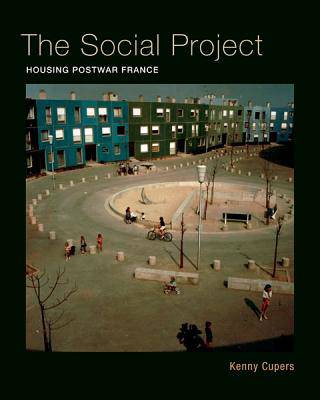
In the three decades following World War II, the French government engaged in one of the twentieth century's greatest social and architectural experiments: transforming a mostly rural country into a modernized urban nation. Through the state-sanctioned construction of mass housing and development of towns on the outskirts of existing cities, a new world materialized where sixty years ago little more than cabbage and cottages existed.
Known as the banlieue, the suburban landscapes that make up much of contemporary France are near-opposites of the historic cities they surround. Although these postwar environments of towers, slabs, and megastructures are often seen as a single utopian blueprint gone awry, Kenny Cupers demonstrates that their construction was instead driven by the intense aspirations and anxieties of a broad range of people. Narrating the complex interactions between architects, planners, policy makers, inhabitants, and social scientists, he shows how postwar dwelling was caught between the purview of the welfare state and the rise of mass consumerism.
The Social Project unearths three decades of architectural and social experiments centered on the dwelling environment as it became an object of modernization, an everyday site of citizen participation, and a domain of social scientific expertise. Beyond state intervention, it was this new regime of knowledge production that made postwar modernism mainstream. The first comprehensive history of these wide-ranging urban projects, this book reveals how housing in postwar France shaped both contemporary urbanity and modern architecture.
Spécifications
Parties prenantes
- Auteur(s) :
- Editeur:
Contenu
- Nombre de pages :
- 424
- Langue:
- Anglais
Caractéristiques
- EAN:
- 9780816689651
- Date de parution :
- 01-05-14
- Format:
- Livre broché
- Format numérique:
- Trade paperback (VS)
- Dimensions :
- 208 mm x 253 mm
- Poids :
- 1233 g


Seulement chez Librairie Club
+ 118 points sur votre carte client de Librairie Club

Les avis
Nous publions uniquement les avis qui respectent les conditions requises. Consultez nos conditions pour les avis.