


- Retrait en 2 heures
- Assortiment impressionnant
- Paiement sécurisé
- Toujours un magasin près de chez vous
- Retrait en 2 heures
- Assortiment impressionnant
- Paiement sécurisé
- Toujours un magasin près de chez vous



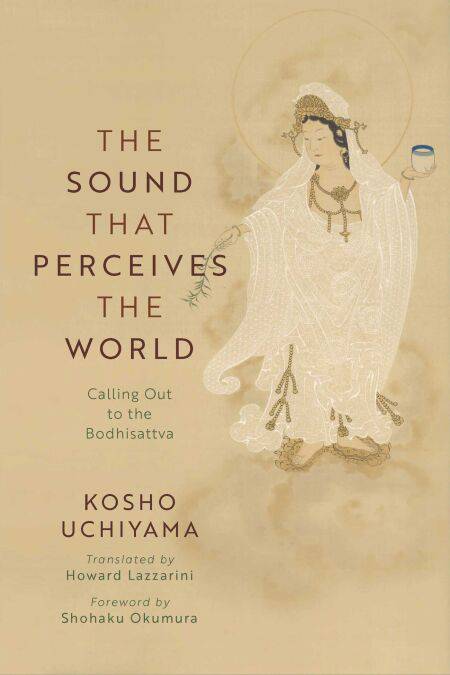
The Sound That Perceives the World EBOOK
Calling Out to the Bodhisattva
Kosho Uchiyama
Ebook | Anglais
24,59 €
+ 24 points
Format
Description
Musings and autobiographically informed commentary on the human condition through the lens of the Kannon-gyo—chapter 25 of the Lotus Sutra—connecting Zen and Pure Land Buddhism through the practice of venerating and chanting the names of buddhas and bodhisattvas.
The Kannon-gyo is chapter 25 of the Lotus Sutra, and its focus is the bodhisattva of compassion, Avalokiteshvara, known in China as Guanyin, and in Japan as Kannon or Kanzeon. The text describes the many ways in which calling out the bodhisattva’s name—Namu Kanzeon Bosatsu—can relieve suffering.
Most schools of Zen Buddhism, and especially the Soto school, eschew such practices as chanting the names of buddhas and bodhisattvas, along with venerating such figures.
The eminent Soto Zen master Kosho Uchiyama Roshi, however, while doing hard physical labor early in his career, could not practice zazen—that is, formal sitting meditation. He came to appreciate the Kannon-gyo and the practices related to it. In particular, he took to reciting Kannon’s name, as recommended in the text of the Kannon-gyo.
Later in life, Uchiyama Roshi suffered from illness that again prevented him from practicing formal Zen, so he returned to the Kannon-gyo and the practice of chanting. He went so far as to assert that chanting Kannon’s name is completely equivalent to zazen, that the two practices are simply two sides of the same coin—a revolutionary idea seemingly at odds with Zen.
Chanting practice is especially accessible, as it can be done while working, traveling, or suffering from illness, and other activities that would ordinarily get in the way of formal Zen practice.
With these practices, the Kannon-gyo, and Kannon herself as a backdrop, Uchiyama Roshi muses about the purposes of religion, the goals of religious practice, and the meaning of enlightenment—and their relation to suffering itself.
The Kannon-gyo is chapter 25 of the Lotus Sutra, and its focus is the bodhisattva of compassion, Avalokiteshvara, known in China as Guanyin, and in Japan as Kannon or Kanzeon. The text describes the many ways in which calling out the bodhisattva’s name—Namu Kanzeon Bosatsu—can relieve suffering.
Most schools of Zen Buddhism, and especially the Soto school, eschew such practices as chanting the names of buddhas and bodhisattvas, along with venerating such figures.
The eminent Soto Zen master Kosho Uchiyama Roshi, however, while doing hard physical labor early in his career, could not practice zazen—that is, formal sitting meditation. He came to appreciate the Kannon-gyo and the practices related to it. In particular, he took to reciting Kannon’s name, as recommended in the text of the Kannon-gyo.
Later in life, Uchiyama Roshi suffered from illness that again prevented him from practicing formal Zen, so he returned to the Kannon-gyo and the practice of chanting. He went so far as to assert that chanting Kannon’s name is completely equivalent to zazen, that the two practices are simply two sides of the same coin—a revolutionary idea seemingly at odds with Zen.
Chanting practice is especially accessible, as it can be done while working, traveling, or suffering from illness, and other activities that would ordinarily get in the way of formal Zen practice.
With these practices, the Kannon-gyo, and Kannon herself as a backdrop, Uchiyama Roshi muses about the purposes of religion, the goals of religious practice, and the meaning of enlightenment—and their relation to suffering itself.
Spécifications
Parties prenantes
- Auteur(s) :
- Editeur:
Contenu
- Nombre de pages :
- 272
- Langue:
- Anglais
Caractéristiques
- EAN:
- 9781614299752
- Date de parution :
- 24-11-25
- Format:
- Ebook
- Protection digitale:
- Adobe DRM
- Format numérique:
- ePub


Seulement chez Librairie Club
+ 24 points sur votre carte client de Librairie Club
Cadeau

Cadeau


Les avis
Nous publions uniquement les avis qui respectent les conditions requises. Consultez nos conditions pour les avis.