


- Retrait en 2 heures
- Assortiment impressionnant
- Paiement sécurisé
- Toujours un magasin près de chez vous
- Retrait en 2 heures
- Assortiment impressionnant
- Paiement sécurisé
- Toujours un magasin près de chez vous



27,95 €
+ 55 points
Description
"...enough detail to give you the context of first-person pilot accounts." - Historical Miniatures Gaming Society
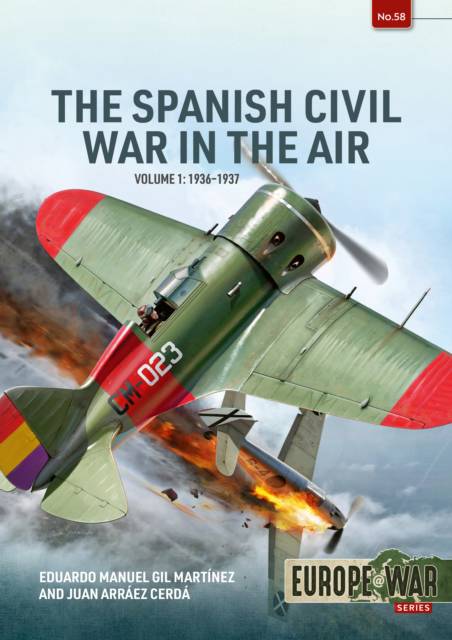
In July 1936, Spain's air arm stood on the brink of obsolescence. Its handful of Nieuport-Delage Ni52C.1 fighters, Breguet XIX bombers and Dornier seaplanes represented a bygone era, wholly unsuited to the modern air war that was about to erupt. The outbreak of the Spanish Civil War transformed the Iberian skies into a proving ground for a new generation of military aircraft and the doctrines that would soon dominate the Second World War.
As the conflict divided the nation, so too was its air power split between the forces of the Republic and the Nationalists. Each side scrambled to acquire new aircraft and foreign assistance. Germany, Italy and the Soviet Union saw an unparalleled opportunity to test their latest machines, weapons and tactics. From the Condor Legion's Heinkel He 51s, Junkers Ju 52s and early Messerschmitt Bf 109 prototypes, to the Aviazione Legionaria's agile Fiat CR.32s and Savoia-Marchetti bombers, and the Soviet-supplied Polikarpov I-15 Chato and I-16 Mosca, the Spanish skies became an aerial laboratory of global consequence.
This first volume of The Spanish Civil War in the Air, covering 1936-1937, charts the early evolution of this conflict from the improvised beginnings of the July uprising to the fierce battles for air superiority over Madrid and the Basque country.
It describes how outdated pre-war aircraft were swiftly replaced by modern foreign types, how Spanish and foreign pilots alike learned deadly lessons in combat, and how these experiences shaped the tactical thinking that later defined the Blitzkrieg and Soviet air doctrines. Key events such as the world's first sustained air bridge between Spanish Morocco and the mainland, the rapid formation of the Condor Legion and the Aviazione Legionaria, and the introduction of Soviet fighters and bombers to the Republican cause are all vividly recounted. The volume also explores the men behind the machines--Spanish aces like Joaquín García Morato and Ángel Salas Larrazábal, German pilots such as Hannes Trautloft, and their Soviet counterparts who fought under assumed names.
Profusely illustrated throughout, The Spanish Civil War in the Air Volume 1: 1936-1937 features a wealth of rare and original photographs, detailed maps, and specially commissioned full colour artworks by Jean-Marie Guillou depicting the aircraft, insignia and emblems of all participants. Together, they bring to life the formative years of one of the most significant and transformative aerial conflicts of the twentieth century--where the lessons of modern air warfare were written in the skies over Spain.
In July 1936, Spain's air arm stood on the brink of obsolescence. Its handful of Nieuport-Delage Ni52C.1 fighters, Breguet XIX bombers and Dornier seaplanes represented a bygone era, wholly unsuited to the modern air war that was about to erupt. The outbreak of the Spanish Civil War transformed the Iberian skies into a proving ground for a new generation of military aircraft and the doctrines that would soon dominate the Second World War.
As the conflict divided the nation, so too was its air power split between the forces of the Republic and the Nationalists. Each side scrambled to acquire new aircraft and foreign assistance. Germany, Italy and the Soviet Union saw an unparalleled opportunity to test their latest machines, weapons and tactics. From the Condor Legion's Heinkel He 51s, Junkers Ju 52s and early Messerschmitt Bf 109 prototypes, to the Aviazione Legionaria's agile Fiat CR.32s and Savoia-Marchetti bombers, and the Soviet-supplied Polikarpov I-15 Chato and I-16 Mosca, the Spanish skies became an aerial laboratory of global consequence.
This first volume of The Spanish Civil War in the Air, covering 1936-1937, charts the early evolution of this conflict from the improvised beginnings of the July uprising to the fierce battles for air superiority over Madrid and the Basque country.
It describes how outdated pre-war aircraft were swiftly replaced by modern foreign types, how Spanish and foreign pilots alike learned deadly lessons in combat, and how these experiences shaped the tactical thinking that later defined the Blitzkrieg and Soviet air doctrines. Key events such as the world's first sustained air bridge between Spanish Morocco and the mainland, the rapid formation of the Condor Legion and the Aviazione Legionaria, and the introduction of Soviet fighters and bombers to the Republican cause are all vividly recounted. The volume also explores the men behind the machines--Spanish aces like Joaquín García Morato and Ángel Salas Larrazábal, German pilots such as Hannes Trautloft, and their Soviet counterparts who fought under assumed names.
Profusely illustrated throughout, The Spanish Civil War in the Air Volume 1: 1936-1937 features a wealth of rare and original photographs, detailed maps, and specially commissioned full colour artworks by Jean-Marie Guillou depicting the aircraft, insignia and emblems of all participants. Together, they bring to life the formative years of one of the most significant and transformative aerial conflicts of the twentieth century--where the lessons of modern air warfare were written in the skies over Spain.
Spécifications
Parties prenantes
- Auteur(s) :
- Editeur:
Contenu
- Nombre de pages :
- 86
- Langue:
- Anglais
- Collection :
Caractéristiques
- EAN:
- 9781804517192
- Date de parution :
- 08-01-26
- Format:
- Livre broché
- Format numérique:
- Trade paperback (VS)
- Dimensions :
- 206 mm x 295 mm
- Poids :
- 340 g


Seulement chez Librairie Club
+ 55 points sur votre carte client de Librairie Club
Cadeau


Les avis
Nous publions uniquement les avis qui respectent les conditions requises. Consultez nos conditions pour les avis.